
Last updated November 25, 2026
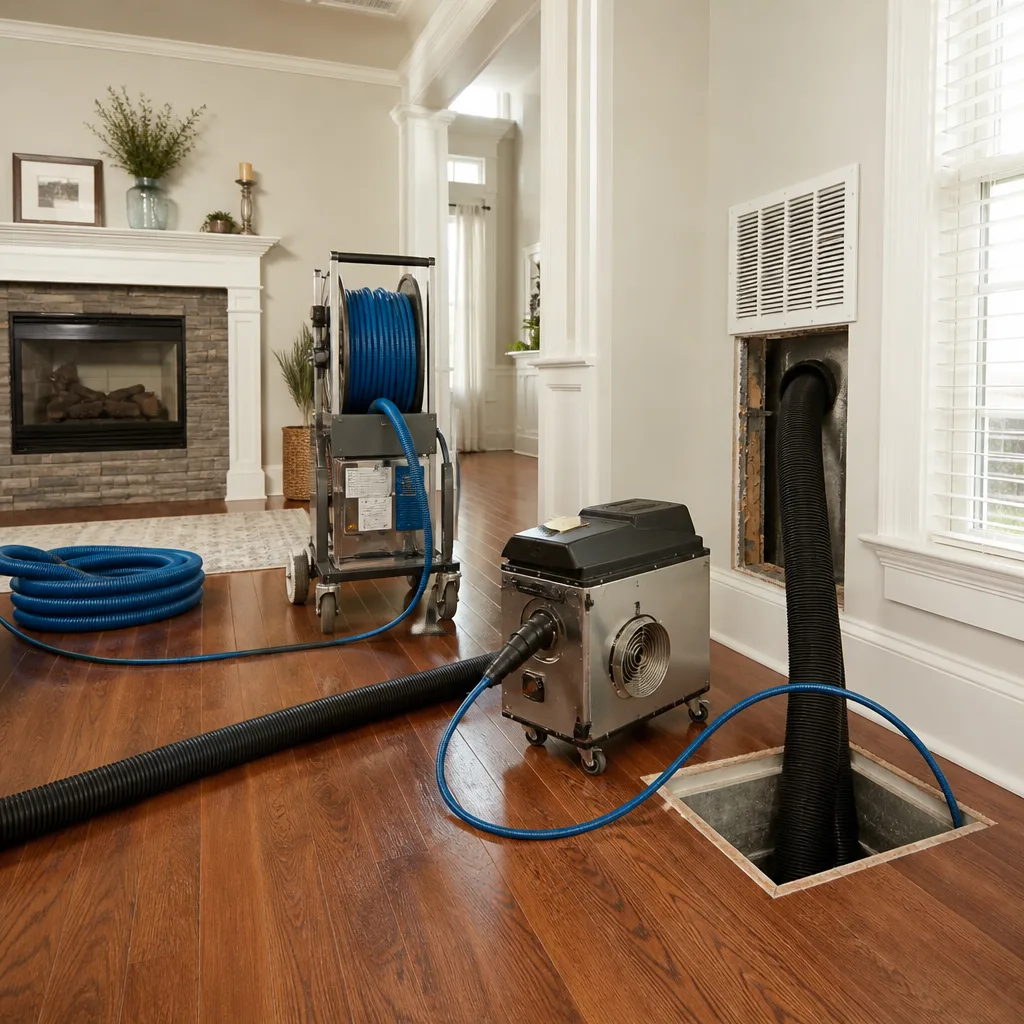 Whole-home duct cleaning
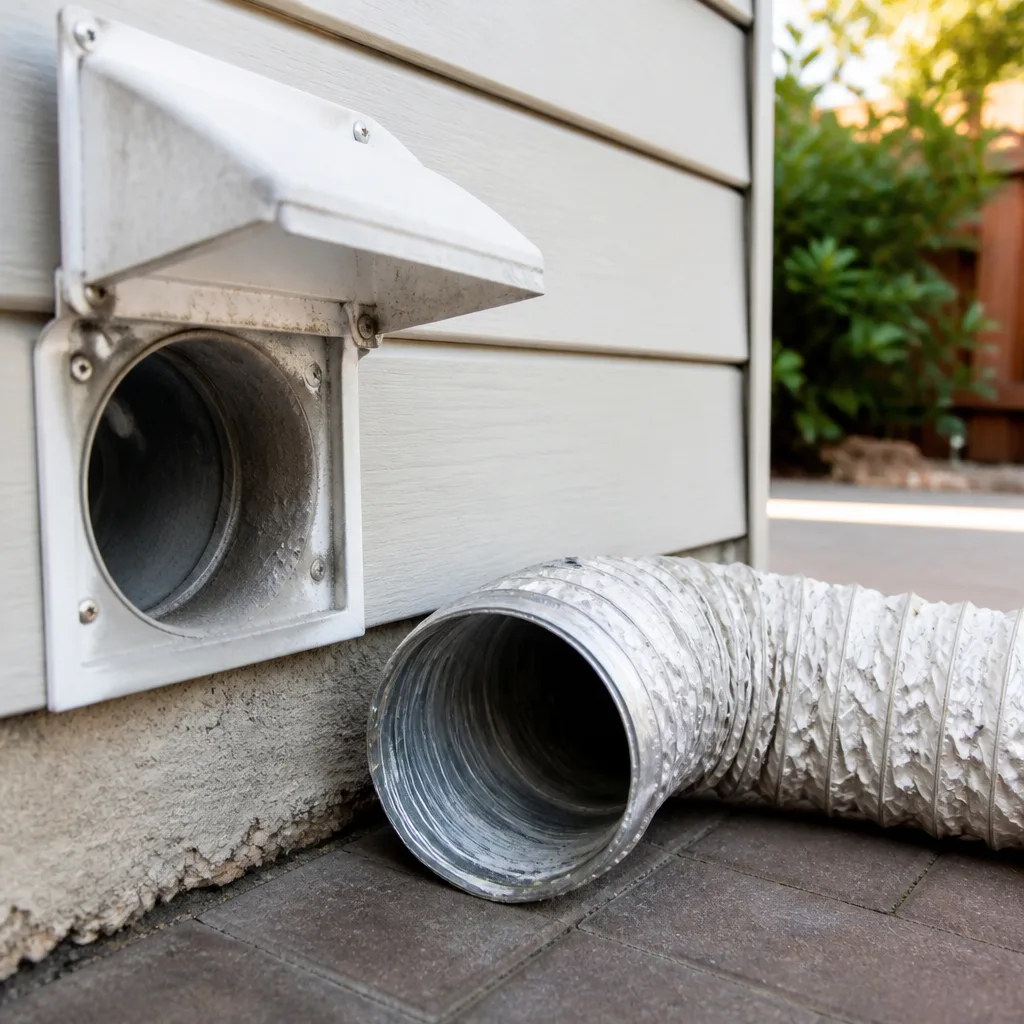 Dryer vent cleaning
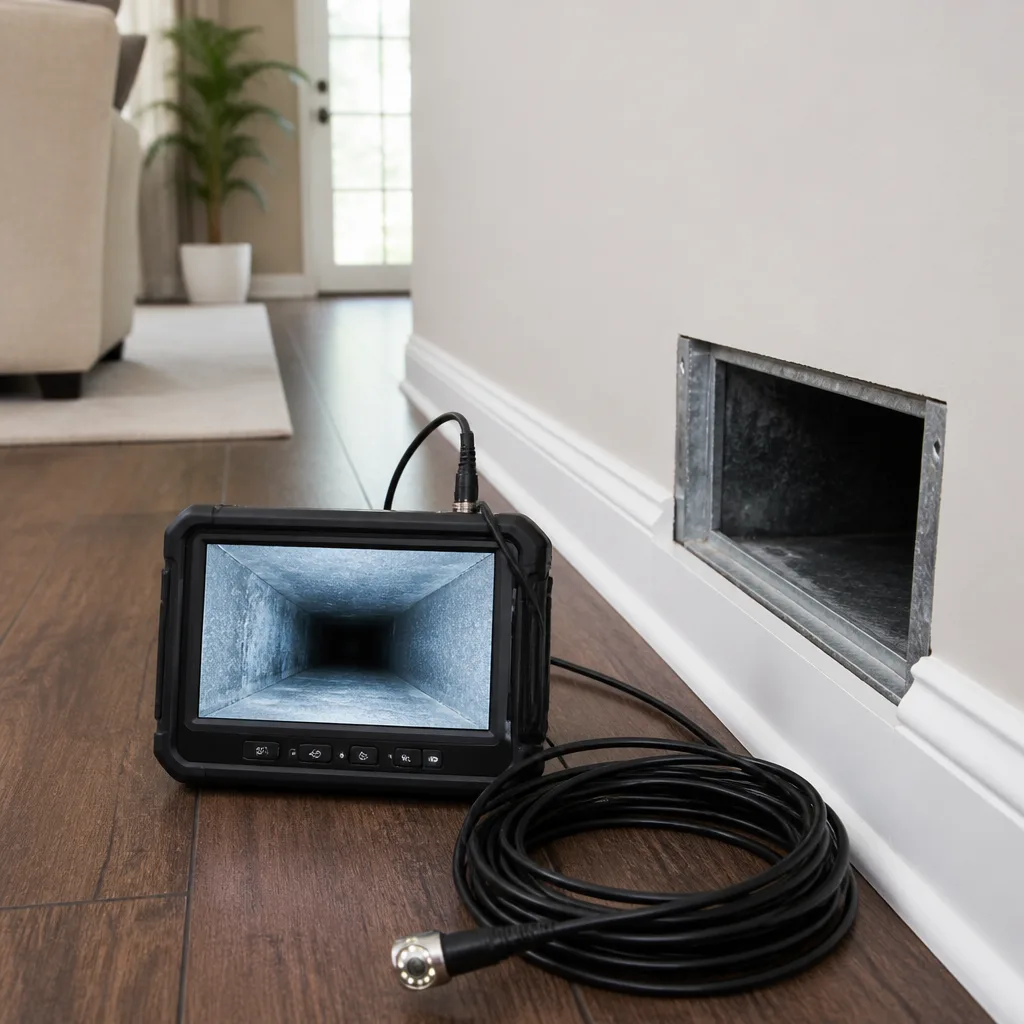 Camera inspection
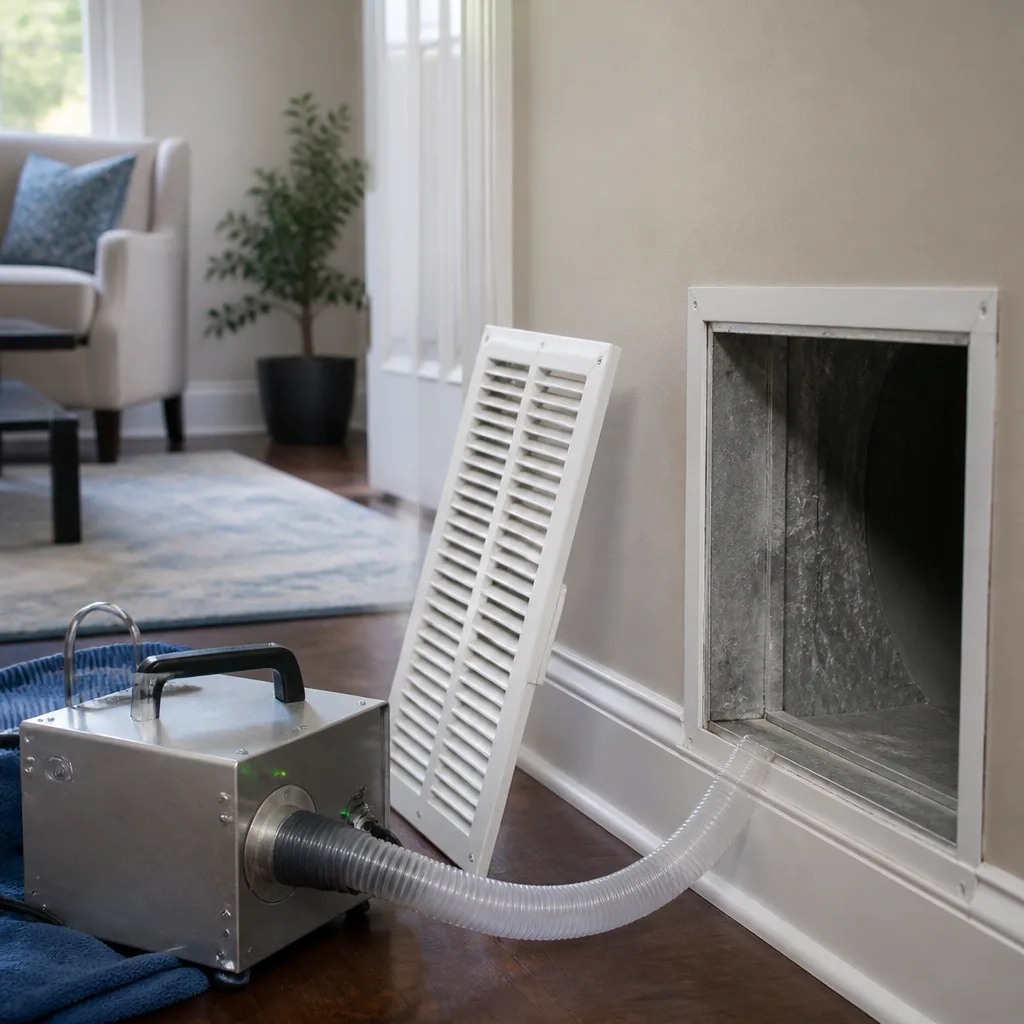 Sanitizing & deodorizing
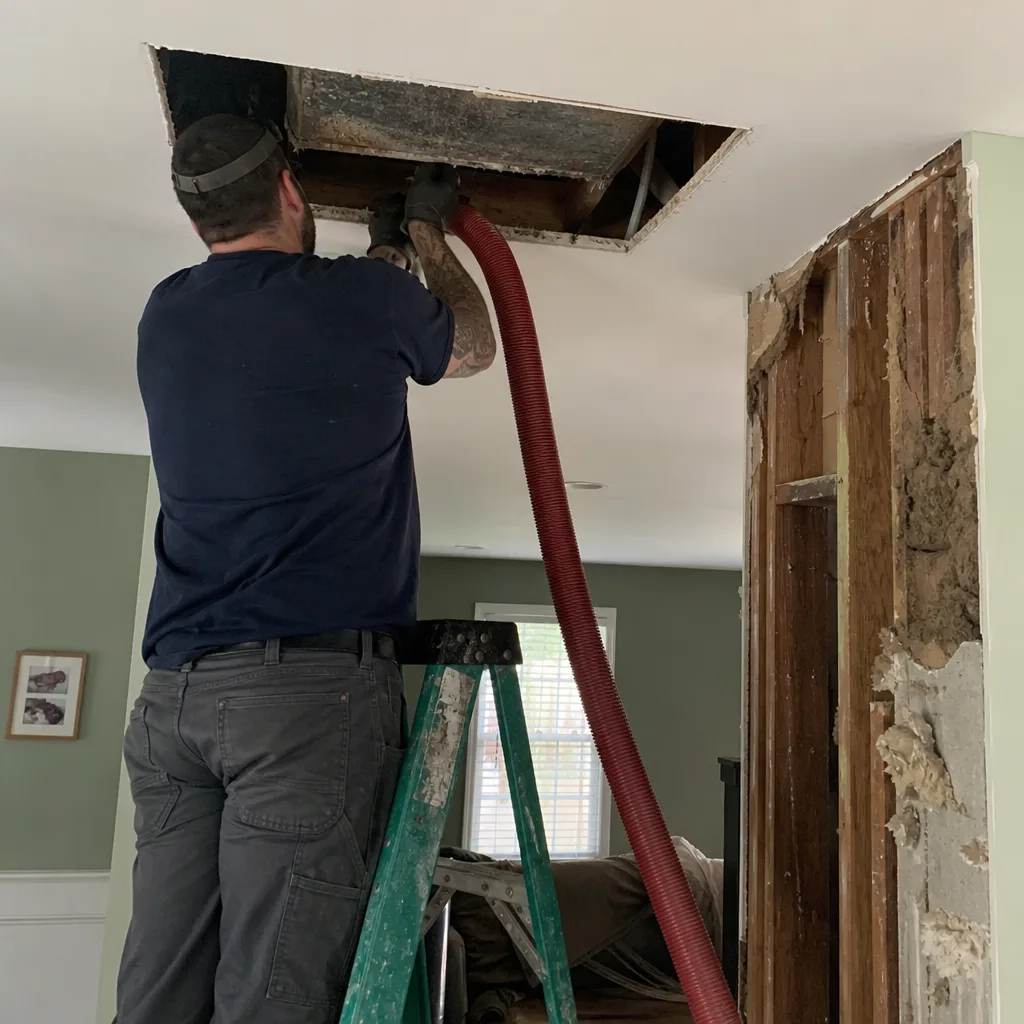
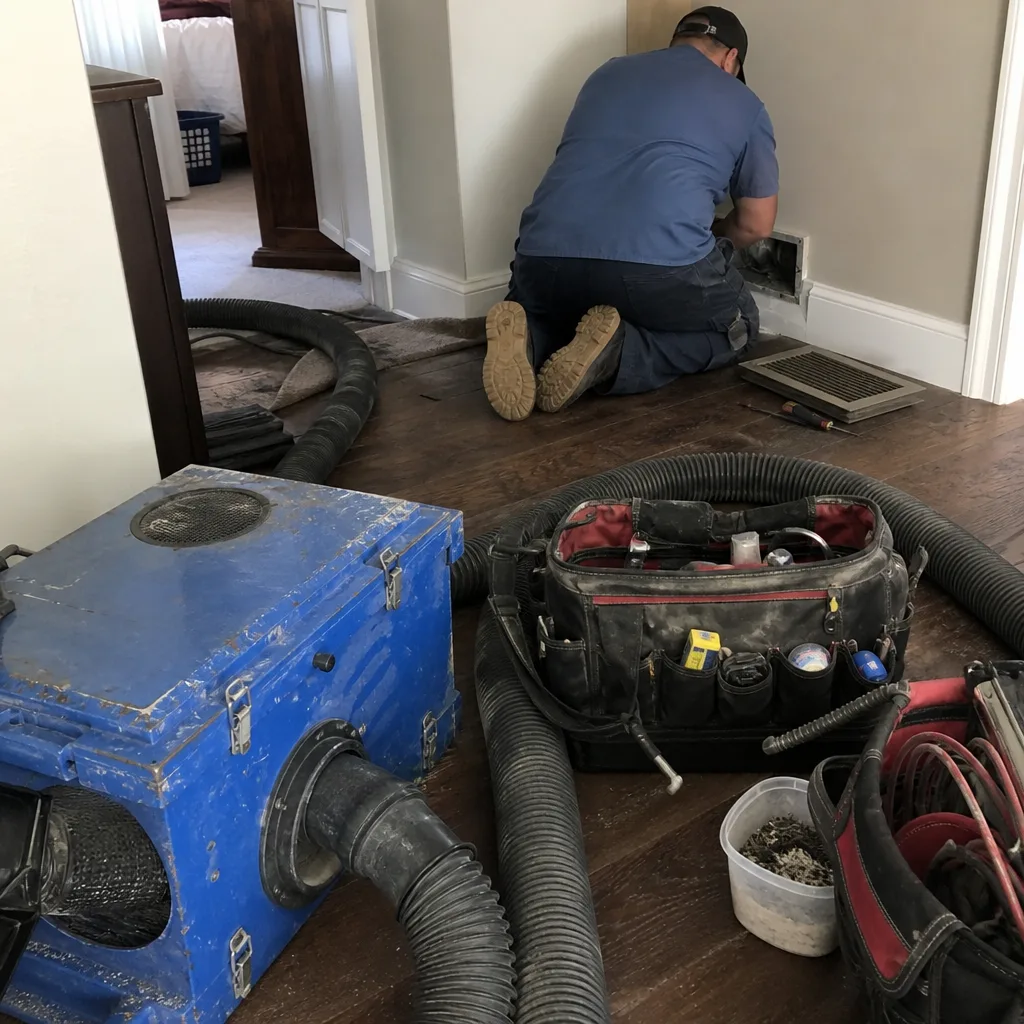
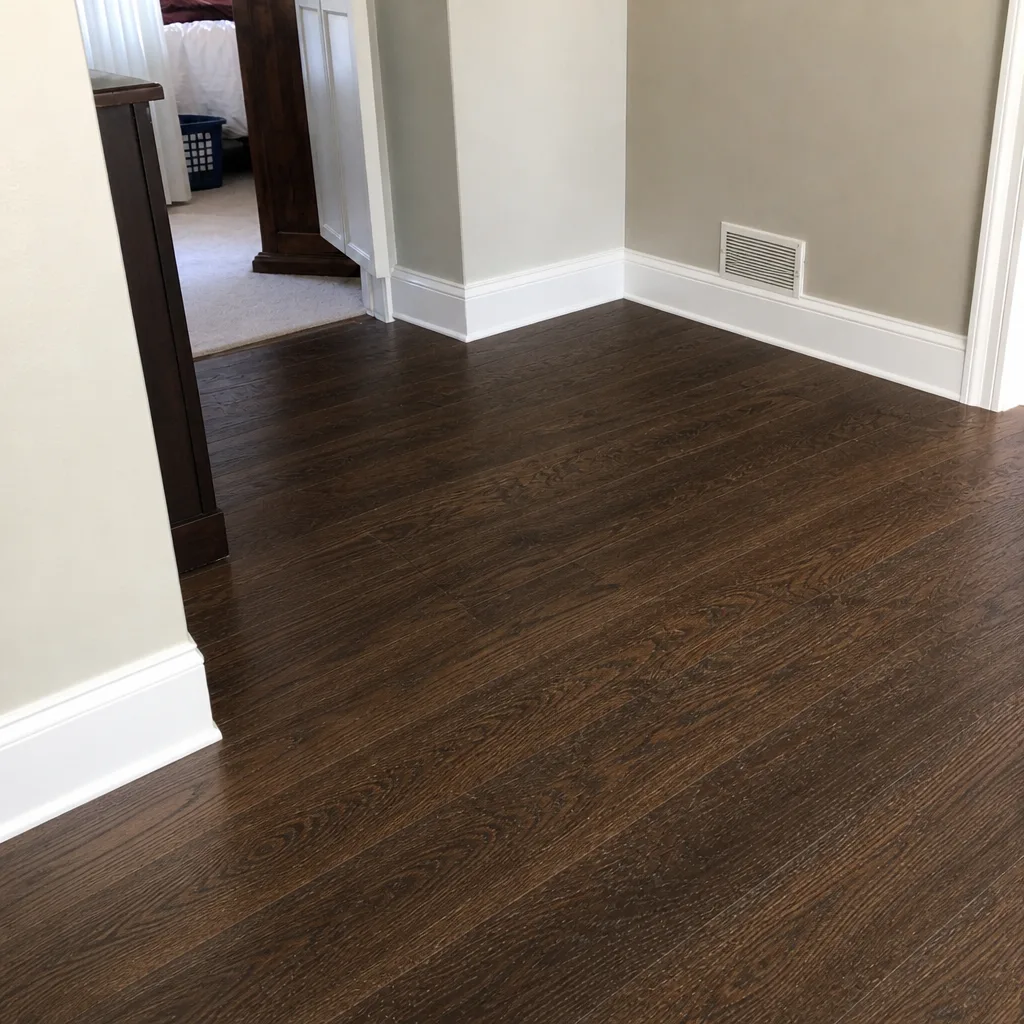
Whole-system duct and dryer vent check with before-and-after photos - you see exactly what came out of your vents
That "$99 whole-house special" is a bait ad - the real number appears once they are in your hallway, or the "clean" is a shop-vac at the register. We photograph the inside of your ducts before and after instead.
Air Duct Cleaning Warning Signs: A Dilworth Homeowner’s Reference Guide
Dust on your supply registers is not proof your ducts are dirty. More often than not, it’s just a dusty register cover, and cleaning the system won’t change it. The warning signs that actually matter are quieter: a room that never warms up, a musty smell that appears only when the blower starts, a fine grey film on the air handler cabinet. In this guide we’ll walk through the signs that point specifically to duct contamination, the signs that point to a structural failure like a disconnected or crushed run, and the signs that mean restricted airflow. You’ll learn how to tell these apart before you pick up the phone, so whoever you do call gets an accurate description of the problem. That distinction saves Dilworth homeowners a lot of wasted service visits.
Quick Answer
The warning signs worth acting on are uneven airflow between rooms, a musty odor that shows up specifically when the HVAC starts, visible dust streaking at supply grilles after a clean register cover, debris or staining at the air handler access panel, and a system that runs longer without heating or cooling as well. Register dust alone is not a reliable sign. If you see more than two of these together, schedule an inspection and get a written scope before anything is done.
Styles & brands we work with
- Whole-home duct cleaning
- Dryer vent cleaning
- Camera inspection
- Sanitizing & deodorizing
Table of Contents
- Register Dust vs. Supply Air Contamination
- Airflow Imbalance: The Structural Warning Sign Most People Miss
- Musty Odor After Startup: Isolating the Source
- What to Look For at the Air Handler Access Panel
- Cleaning vs. Repair vs. Replacement: Telling Them Apart
- Why Dilworth Homes See These Signs
- How a Proper Inspection Should Go
- Common Mistakes to Avoid
Register Dust vs. Supply Air Contamination
A dusty register cover tells you almost nothing about the inside of your duct system. The cover is a metal or plastic surface sitting in the room, exposed to the same dust that lands on every flat surface in a Dilworth home. It gets dusty whether your ducts are pristine or filthy. The question worth asking is whether the dust is coming out of the supply air or just settling onto the grille from the room itself.
Here’s the simplest way to tell them apart. Wipe a register cover clean with a damp cloth and let it dry completely. Then tape a white cloth or a piece of white paper towel loosely over the grille so the supply air passes through it, and run the system for fifteen to twenty minutes. Pull the cloth off and look at it in daylight.
- Light grey, even film: normal household dust. The system is fine at this grille.
- Heavy particulate, visible grit, or dark streaking: debris is likely being carried through the duct and pushed out the supply. That’s a systemic sign.
- Black or dark grey smudges in a pattern near the edges: often indicates air is escaping around the boot or the grille rather than through it, which points to a seal problem rather than a cleaning problem.
Repeat the test at three or four registers across different rooms. If one grille tests dirty and the rest are clean, you have a localized issue at that run, not a whole-system failure. If most grilles test dirty, the contamination is upstream. That difference decides whether you need a single duct examined or the full system looked at.
One more thing worth knowing: the same test works on a return grille, but expect more dust there regardless, because return air is already carrying everything the rooms have collected. Judge the supply grilles, not the returns, when you’re trying to determine whether the system itself is the problem. A full-system approach, like the kind we describe on our air duct cleaning page, starts with exactly that distinction.
Airflow Imbalance: The Structural Warning Sign Most People Miss
Uneven temperatures between rooms are usually blamed on the thermostat or the HVAC equipment. Most of the time the equipment is fine and the problem is in the ductwork. A room that never keeps up, no matter how the system is adjusted, is a classic structural warning sign, and it points to duct leakage, a crushed flex run, a disconnected joint, or a damper that’s stuck shut.
Here’s what uneven airflow typically indicates:
- One room consistently warmer or colder than the rest: often a crushed or kinked flex duct, or a supply boot that came loose from the ceiling or subfloor.
- All rooms on one side of the house underperforming: may indicate a trunk line problem, a collapsed section, or heavy leakage at joints along that run.
- Strong airflow at the registers closest to the air handler, weak airflow at the far end: that pressure drop usually means leakage somewhere in the middle of the run.
- Rooms that got worse after a renovation or a roof change: a duct might have been cut, rerouted, or crushed during the work and never reconnected properly.
You can check the easy things yourself. Feel the airflow at each register by hand and compare. Look in the attic or crawlspace for ducts that are visibly disconnected, sagging, or torn. A flex duct with a hard bend or a crushed section will never deliver proper air no matter how clean it is. That’s a repair problem, not a cleaning problem, and no amount of vacuuming fixes it.
Dilworth’s older homes often have original sheet metal trunk lines with flex branches added later, and those mixed systems are where we see the most leakage. The joints between a metal trunk and a flex branch are the weak point. If you’re noticing uneven temperatures in a home like that, duct repair and sealing is usually the answer, not another round of cleaning.
Musty Odor After Startup: Isolating the Source
A musty smell that appears only when the HVAC starts, and fades a few minutes later, is one of the clearest signs that the source is inside the air pathway. A general musty smell that’s present all the time, in every room, whether the system is running or not, is more likely coming from a damp basement, a crawlspace, or a bathroom without proper ventilation. The timing is the giveaway.
Here’s how to isolate it. Leave the system off for a couple of hours and walk through the house, paying attention to your nose. Note which rooms smell musty with the system off. Then turn the system on and note whether and where the smell intensifies. If the smell appears within a minute or two of startup and is strongest near supply grilles, the odor is being distributed by the air handler, which points to moisture or microbial growth somewhere in the ductwork or the evaporator coil area.
A few patterns worth knowing:
- Smell at startup only, strongest at supply grilles: duct or coil contamination.
- Smell strongest near the air handler closet or attic unit: a wet drain pan, a fouled coil, or standing water under the unit.
- Smell in one room only, system on or off: localized moisture, often a bathroom, laundry area, or a window that isn’t sealing well.
- Smell that appeared after a roof leak or plumbing event: moisture intrusion into the ductwork or the attic insulation around it.
Musty smells tied to the duct system are worth taking seriously because they indicate active moisture, and moisture is what supports microbial growth on duct lining, insulation, and the coil. This is where sanitizing belongs in the conversation alongside cleaning. Products like Guardsman-grade protective treatments can be part of that sanitizing scope, but they only make sense after the moisture source has been addressed. Treating odor without finding the moisture just buys you time until it returns. If a musty smell persists after startup in a Dilworth home, it’s worth a proper look at the coil and drain pan alongside the ducts.
What to Look For at the Air Handler Access Panel
The air handler access panel is where you can see concrete evidence of downstream duct problems, and it’s one of the few places a homeowner can safely look without getting into the duct interior. Turn the system off at the thermostat before opening any access panel. The blower pulls strong airflow and the evaporator coil is a delicate component. Don’t reach inside, don’t touch the wiring, and if anything looks wet or burned, call a technician rather than investigating further.
What you’re looking at, and what each sign means:
- The evaporator coil. A light, even dust film is normal. A matted, fibrous layer, or dark buildup concentrated on the downstream side of the coil, means debris has been passing through the return duct and lodging on the coil. That points to a contaminated return system, not just a dirty filter.
- The drain pan. A dry pan is good. Standing water, slime, or a rust line at a consistent water level means the pan isn’t draining properly, and that moisture feeds growth that then gets distributed through the supply ducts.
- The blower wheel. Look for even dust deposits on the blades. Heavy, uneven caked deposits on one side of the wheel indicate long-term debris accumulation, often from a return system that has been pulling unfiltered air.
- The cabinet interior and panel gasket. Streaks of dust around the panel opening, or a gasket that’s torn or missing, mean unfiltered air is being drawn into the system past the filter. That air carries debris straight into the coil and blower.
- The filter slot. A filter that’s collapsed, bypassing air around its edges, or the wrong size for the slot defeats the entire filtration path. That’s a cheap fix with an outsized effect on duct contamination.
If two or three of those signs show up together, the system has been running with a compromised air path for a while, and the ducts are likely dirty downstream. Our HVAC cleaning service covers exactly this zone: the coil, the blower, the drain pan, and the ductwork connected to them. If you’re not sure what you’re seeing, don’t guess. An inspection with a camera and proper equipment is what confirms it.
Cleaning vs. Repair vs. Replacement: Telling Them Apart
Most repeat duct service calls come from one mistake: cleaning a duct system that actually needed repair. A crushed return line filled with dust still won’t deliver air after it’s been vacuumed. A disconnected supply run still dumps air into the attic after it’s been cleaned. And a duct system with a moisture problem will just foul again, often within months. Getting the diagnosis right the first time is what actually resolves the issue.
Here’s how the categories usually sort out:
- Cleaning is the right answer when: the ductwork is intact, sealed, and properly sized, but has accumulated dust, debris, or construction residue, often after a renovation, a long stretch without service, or years of a neglected filter.
- Repair and sealing is the right answer when: there are visible disconnections, crushed or torn flex runs, leaking joints, or a boot that’s separated from the floor or ceiling opening. The system’s structural integrity is the problem, and the buildup is a symptom of that.
- Replacement or rerouting is the right answer when: a run is collapsed, wrapped in asbestos-containing material (leave that to a licensed abatement professional), or so poorly designed that it can never deliver proper airflow regardless of condition. That’s typically an HVAC contractor’s scope.
- Both cleaning and repair are often needed together when a duct system has leaked for years: it needs cleaning to remove what leaked in, and sealing to stop the leak.
This is why a full air-pathway scope matters. If the company you hire only cleans vents and doesn’t repair or seal ductwork, they’ll clean a system that’s structurally compromised and the problem will come back. Ask directly, before anything is scheduled, whether duct repair and sealing are part of the scope. In our experience the answer to that question tells you most of what you need to know about the provider.
Why Dilworth Homes See These Signs
The specific housing stock and climate here creates a predictable set of duct issues. Dilworth’s older homes were built for a different era of heating and cooling, and many have had ductwork added, modified, or partially replaced over the years. That’s where the warning signs come from.
The pattern we see most often is a mix of original metal trunk lines with flex branches added later. The joints between the two hold up for a while, but over years of summer heat and winter cold cycles, the tape fails, the joints loosen, and air starts escaping into an attic or crawlspace instead of into a room. That’s the source of those pressure-drop symptoms: strong airflow near the air handler, weak airflow at the far registers. It’s not dirty ducts. It’s leaking ducts.
Summers here also push the system hard, which means higher run times, more condensation on the coil, and a wet drain pan if anything is even slightly off. That’s why we see more musty-startup smell reports in mid-summer than any other time of year. Wet decking in the attic after a heavy rain can contribute to moisture around duct runs too, and that moisture finds insulation and duct lining quickly.
If you’re in an established Dilworth home and you’re seeing two or more of the signs in this guide, it’s worth a visit from someone who knows the neighborhood’s housing patterns. Our team at Air Duct Cleaning Dilworth works in these homes regularly. Our technicians have up to 9 years of experience, and they’ve seen the same mix of symptoms show up for the same reasons across the neighborhood.
How a Proper Inspection Should Go
An inspection that just involves shining a light into a register isn’t an inspection. A proper one checks the air handler, the visible duct runs, the supply and return sides, and asks about your symptoms before touching anything. Here’s the sequence you should expect, and the questions you should ask.
- Ask about symptoms first. A good technician wants to know which rooms are uneven, whether there’s a smell and when it appears, whether there’s been a renovation, and what the filter situation has been. That information shapes where to look.
- Inspect the air handler. Coil, drain pan, blower wheel, filter slot, and cabinet gasket. This is where you find evidence of a compromised air path.
- Check accessible duct runs. Attic and crawlspace runs, looking for disconnections, crushing, sagging, torn insulation, and leaking joints.
- Assess airflow and pressure. Not just a hand test at the register. Proper equipment makes the difference between “the airflow looks okay” and knowing whether the system is moving the air it should.
- Recommend the right scope. Cleaning, repair and sealing, sanitizing, or a combination. Each one is a different job with a different result, and the recommendation should match what the inspection showed.
- Show you the evidence. Photos before and after, and preferably a walk-through of what was actually cleaned. This is where a lot of companies get vague.
The equipment matters here. Abatement Technologies HEPA filtration tools bring remediation-grade containment into a home, which means extracted debris gets captured rather than redistributed into the rooms. Rotobrush mechanical brush systems and Nikro HEPA-rated vacuums are the industry benchmark for that work, and a company that carries them is set up to do the job properly. If you’re comparing providers, ask what equipment they bring. The answer tells you a lot about the result.
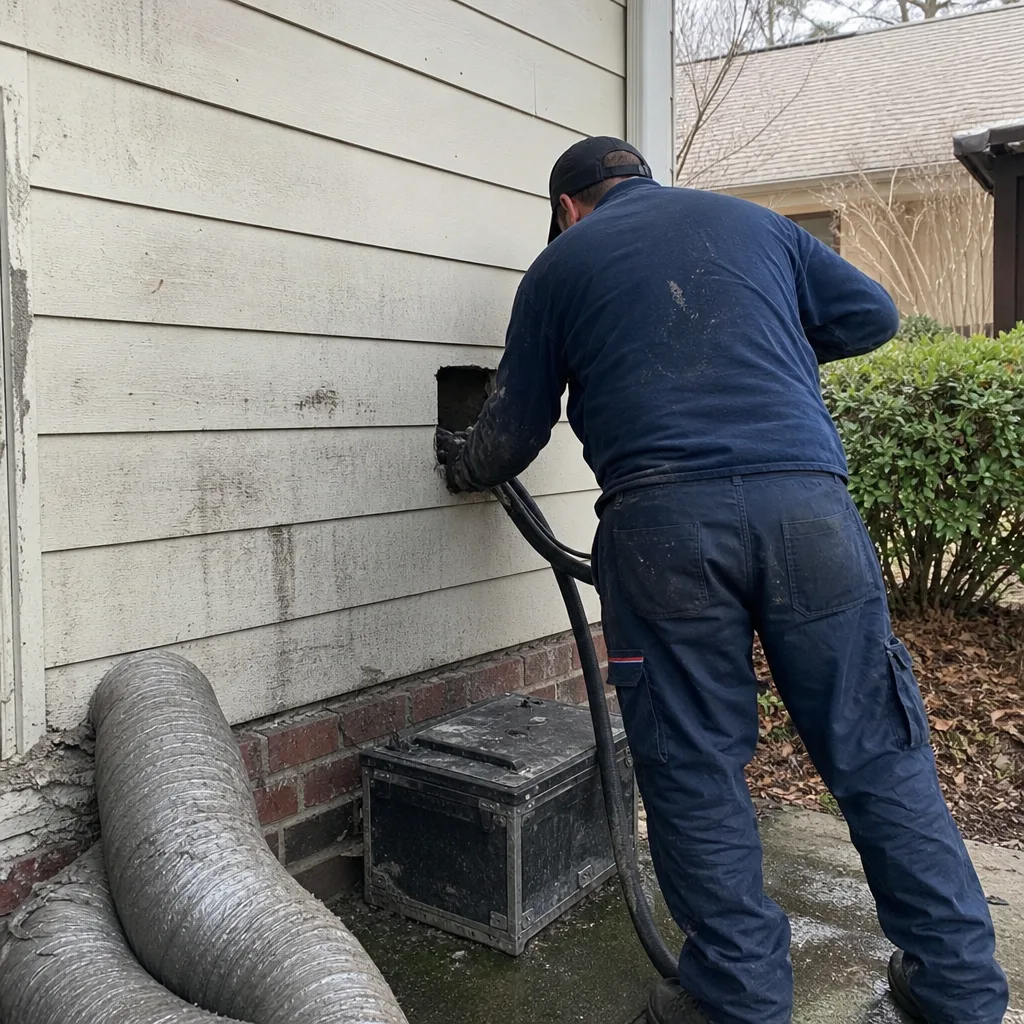
If your duct inspection turns up a dryer vent problem at the same time, which is common in older Dilworth homes where the vent run is long or the pipe has been crushed behind the dryer, that’s a separate service and one worth doing. You can read about what that involves on our dryer vent cleaning page.
Common Mistakes to Avoid
- Treating register dust as proof of a dirty system. As the pull test shows, a dusty register cover is often just a dusty register cover. Wipe it clean and run the test before deciding the ducts need service.
- Assuming uneven airflow means a cleaning is due. Uneven temperatures almost always point to leakage or a crushed run. Cleaning won’t fix either, and the problem returns after one season in these homes.
- Booking on a coupon price. A very low advertised price usually gets you a light vacuuming of the easily accessible ducts, without the fan, coil, or full pathway. That’s not the same service as a full-system clean, and it doesn’t deliver the same result.
- Skipping the air handler. A cleaning that ignores the coil, blower, and drain pan misses the location where dust and moisture actually accumulate. The ducts may end up cleaner than the equipment that’s blowing through them.
- Cleaning a system that has moisture problems. If there’s active moisture in the ductwork or the drain pan, cleaning alone is temporary. Address the moisture source, then clean and sanitize.
- Hiring a company that doesn’t do repair or sealing. In an older Dilworth home with mixed metal-and-flex ductwork, cleaning without repair or sealing just resets the clock. Ask about duct repair before you book.
- Not asking for before-and-after photos or a walk-through. If you can’t see what was done, you can’t verify it. Insist on documentation of your own system.
See the difference
 Before
 After
 Before
 After
 Before
 After
When to Call a Professional
Call when you’re seeing two or more of the signs in this guide at once, when you have a musty smell that appears specifically at HVAC startup, when airflow is uneven across rooms, or when you’ve found visible debris, moisture, or damage at the air handler. Also call if you’ve recently finished a renovation and the system pulled construction dust through it, or if the previous owner never had the ducts serviced and there’s no record of it. What you shouldn’t do is call the number on the cheapest coupon in the mail and hope for the best. Get a written scope, ask what equipment will be brought in, and confirm that repair and sealing are on the table if the inspection shows they’re needed. Air Duct Cleaning Dilworth offers free estimates in Dilworth. Call (855) 337-2086. We answer 24/7. Fast dispatch from 7am to 7pm, Sunday through Friday.
Frequently Asked Questions
The clearest signs are a musty odor that appears at HVAC startup, visible debris or staining at the air handler access panel, uneven airflow across rooms, and dust streaking at supply grilles after a clean register test. A single dusty register cover is not a reliable indicator. If you’re seeing two or more of these together, schedule an inspection. Call (855) 337-2086 for an exact quote. Estimates are free.
Often, yes. Uneven heating or cooling across rooms most commonly points to duct leakage, a crushed flex run, a disconnected supply boot, or a stuck damper, not a failing HVAC unit. A technician can confirm whether the equipment is producing proper airflow and whether the ducts are delivering it. Cleaning won’t correct a delivery problem. Call (855) 337-2086. We answer 24/7.
A musty smell that appears specifically when the system starts and fades shortly after points to moisture somewhere in the air pathway, which can support microbial growth on the coil, drain pan, or duct lining. It doesn’t confirm mold on its own. It does mean moisture needs to be identified and addressed before cleaning and sanitizing. Call (855) 337-2086 for an inspection, with fast dispatch from 7am to 7pm, Sunday through Friday.
Price depends on the size of the system, how many supply and return runs there are, whether the air handler needs to be cleaned alongside the ducts, and whether repair or sealing is needed. That’s why we give one flat price per system, agreed in writing before any work starts, based on what the inspection finds. There’s no per-vent pricing and no teaser figure that grows once we’re on site. Call (855) 337-2086 for a free estimate.
Cheap quotes usually cover less work: a quick vacuum of the easily reached supply ducts, without cleaning the fan, coil, or blower, and often without any repair or sealing on the scope. A full-system clean takes longer, uses proper gear like Rotobrush and Nikro HEPA-rated vacuums, and costs more because it does more. Ask what’s included and what equipment is brought before you compare prices. Call (855) 337-2086 for a written scope.
Ask for before-and-after photos of your own system, and ask for a walk-through of what was cleaned and what wasn’t. A proper job includes documentation, and any provider should be able to show you evidence at the air handler and at the supplies. Abatement Technologies HEPA filtration is part of how we keep extracted debris out of the air while we work. Call (855) 337-2086. Estimates are free.
There’s no universal schedule. Homes with recent renovations, pets, allergies, or a history of moisture problems generally need it sooner than others, and a well-sealed system with a properly maintained filter stays cleaner longer. Rather than following a fixed interval, the practical approach is to inspect when you notice the warning signs, and to clean when the inspection shows it’s needed. Call (855) 337-2086. We answer 24/7, with fast dispatch from 7am to 7pm, Sunday through Friday.
The Bottom Line
The most useful thing you can do is learn to tell the three warning sign categories apart. Register dust is usually cosmetic. Uneven airflow points to a structural problem like leakage or a crushed run, and cleaning won’t fix it. A musty smell at startup points to moisture, and cleaning without addressing the source is temporary. If you can describe which category your symptoms fall into when you call, you’ll get a more accurate conversation, a more accurate scope, and a better outcome. In a Dilworth home with the mixed duct systems we see so often, that difference matters. Inspection is free. Call (855) 337-2086. We answer 24/7. Fast dispatch from 7am to 7pm, Sunday through Friday. And when you look at the Air Duct Cleaning Dilworth page, you’ll see the full service scope we can bring to the job.
Written by the team at Air Duct Cleaning Dilworth.