
Last updated November 25, 2026
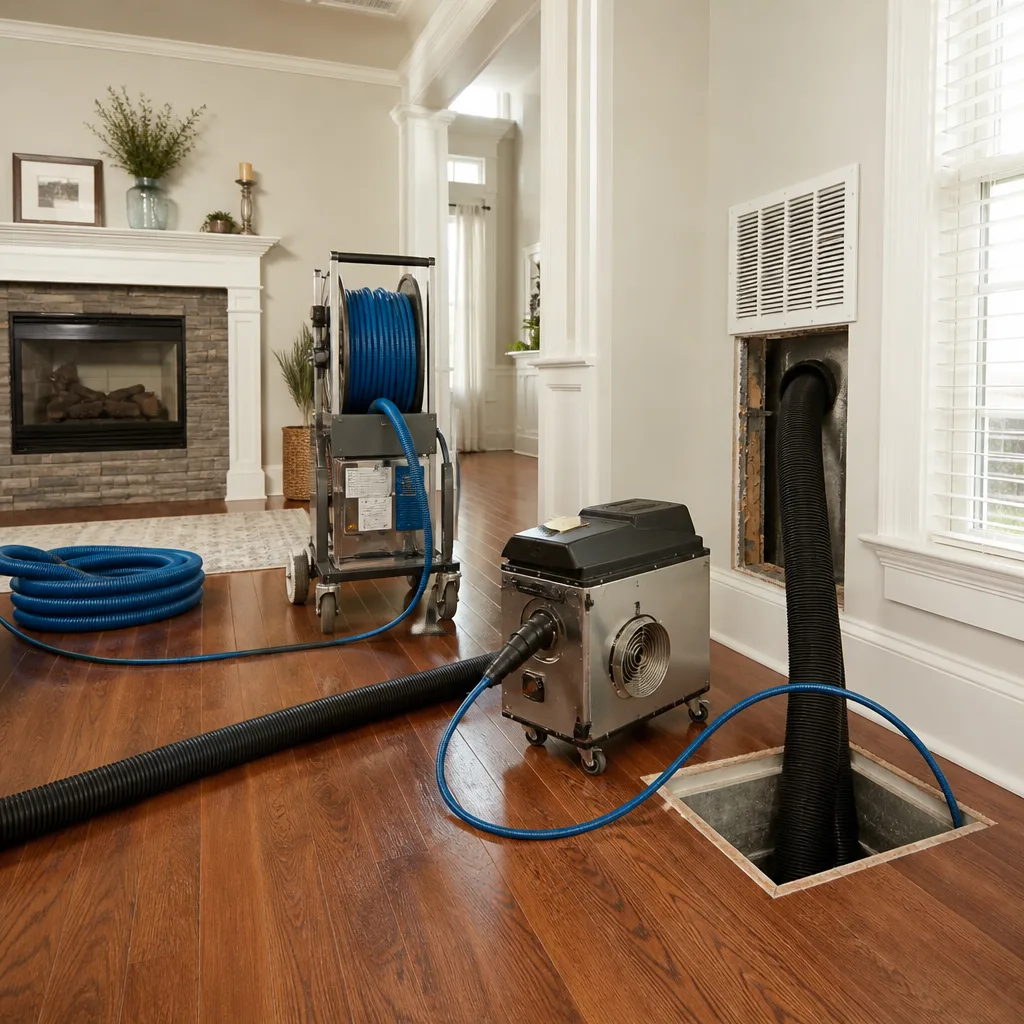 Whole-home duct cleaning
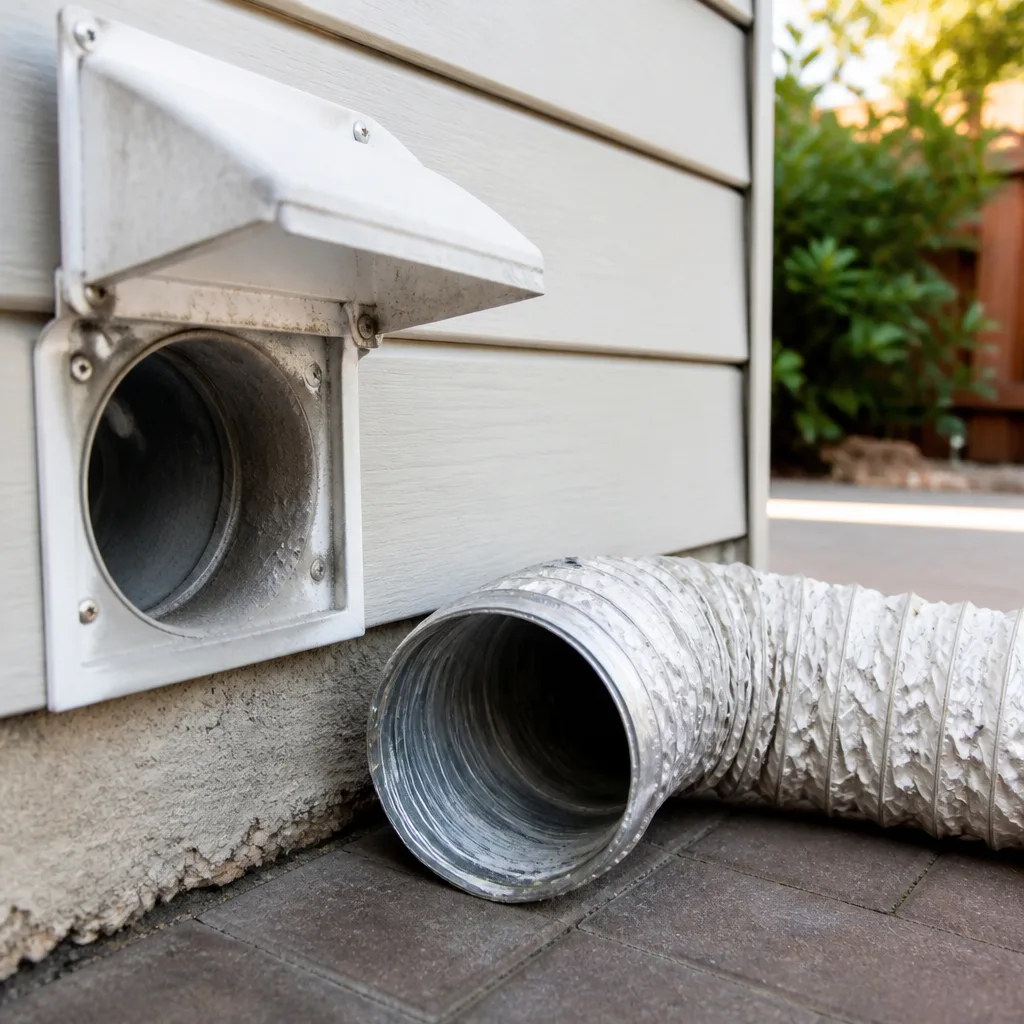 Dryer vent cleaning
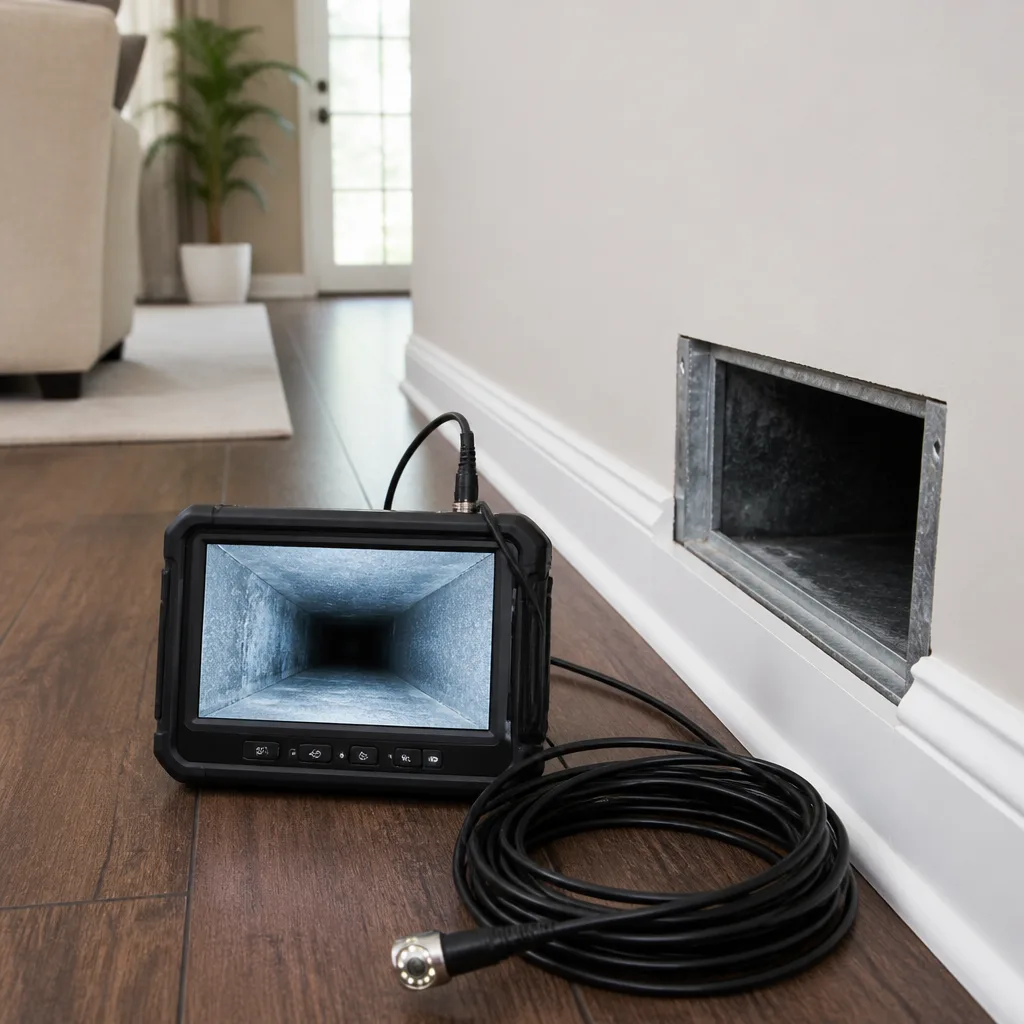 Camera inspection
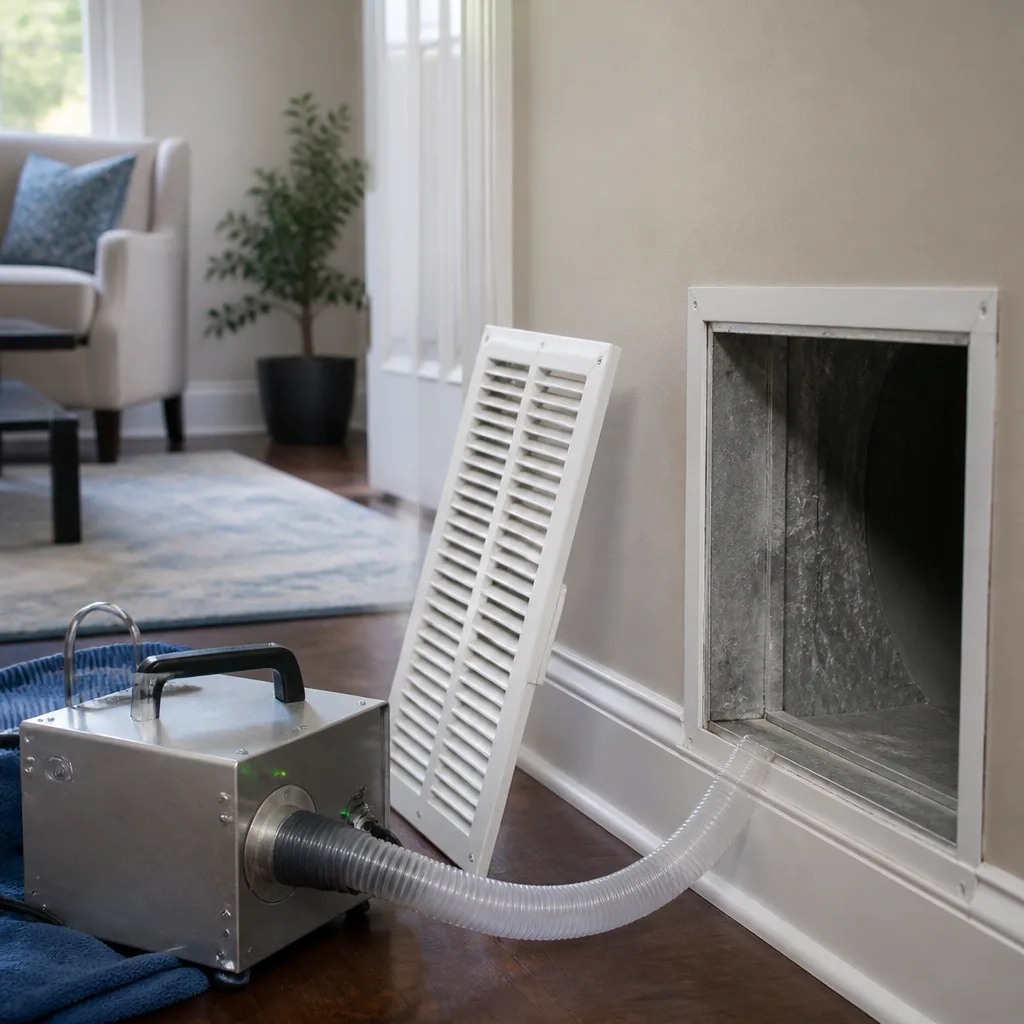 Sanitizing & deodorizing
Whole-system duct and dryer vent check with before-and-after photos - you see exactly what came out of your vents
That "$99 whole-house special" is a bait ad - the real number appears once they are in your hallway, or the "clean" is a shop-vac at the register. We photograph the inside of your ducts before and after instead.
Air Duct Cleaning Maintenance Schedule: What to Do and When
Most homeowners in Dilworth are working from the same rule of thumb: clean the ducts every three to five years. The rule is fine as a starting point. It’s also wrong for nearly everyone. A family of four with two dogs, running the HVAC ten months a year, is on a completely different contamination curve than a retired couple living in the same square footage. Same house size, same neighborhood, wildly different duct conditions. The variables that actually decide how fast debris accumulates – home age, run time, occupancy, pets, filter quality – are almost never part of the standard recommendation. This guide builds a conditional schedule around them, so you clean when your home genuinely needs it, not when a calendar says so. We’ll walk through the intervals, the calendar tasks around the cleaning itself, and the symptoms that tell you your timeline was too generous.
Quick Answer
Most homes need a full duct cleaning every three to five years, but that range compresses to every two to three years for homes with pets, recent renovations, allergy diagnoses, or older HVAC systems running long hours. It extends to every five to seven years for low-occupancy homes with clean filters and consistent maintenance. The single biggest variable is how much airborne debris enters the system and how long the blower runs – and in Dilworth, both are usually higher than the homeowner assumes.
Styles & brands we work with
- Whole-home duct cleaning
- Dryer vent cleaning
- Camera inspection
- Sanitizing & deodorizing
Table of Contents
- Why Your Duct Cleaning Schedule Should Be Built on Condition, Not the Calendar
- The Four Variables That Compress or Extend Your Cleaning Interval
- Why Dilworth’s Humid Summers Change the Equation
- The Year-Round Duct Maintenance Calendar
- Filters, Returns, and the Cheap Fix Most People Skip
- Dryer Vents and Return Grilles as Leading Indicators
- How to Log a Duct Condition Baseline After Cleaning
- When Cleaning Isn’t Enough: Repair and Sealing
Why Your Duct Cleaning Schedule Should Be Built on Condition, Not the Calendar
A duct system doesn’t accumulate debris on a timer. It accumulates debris as a function of what? Air carrying particulate matter through it, hour after hour, year after year. That means the same house in the same Dilworth neighborhood can carry two completely different soil loads inside its ductwork depending on who lives there and how the system runs. A property manager overseeing a rental with changing tenants, two or three pets cycling through, and the HVAC running from March through December is looking at a contamination rate at least double that of a quiet owner-occupied home on the same block.
We’ve seen this play out across Dilworth and the surrounding neighborhoods, and the pattern is consistent: the homes that get cleaned on a rigid schedule without any inspection tend to be either cleaned too late (after the return-side trunk has already begun to load up) or cleaned too early (a low-load home paying for a service it didn’t need yet). What you actually want is a condition-based framework, which means you need three things:
- A professional cleaning that establishes a clean baseline and documents the condition at the start
- A simple housekeeping calendar that keeps the load predictable between cleanings
- Two or three measurable signals that tell you when the load is climbing back toward the “clean it” threshold
Once you have those in place, the “every three to five years” number becomes a reference point instead of a decision. The rest of this guide is how to build it. If you want to skip to the professional step first, you can schedule a full-system air duct cleaning and use that visit to establish the baseline we describe in section seven.
The Four Variables That Compress or Extend Your Cleaning Interval
Four factors dominate the contamination curve. Each one moves the standard three-to-five-year window up or down. In Dilworth, we typically see at least two of the four in play.
1. Pets
Every pet in the home adds dander and hair that gets airborne, pulled into the return grilles, and deposited onto duct walls. One indoor pet generally compresses the interval by about a year. Two or more indoor pets, or any animal that sheds seasonally, brings it down closer to the two-to-three-year range. The debris isn’t just hair – it’s the finer dander that binds to the moisture film on duct surfaces and gives dust something to cling to.
2. Renovation Activity
Drywall dust is one of the most aggressive contaminants a duct system will ever see. If you’ve had drywall work, sanding, or flooring installation since the last cleaning, treat that as a reset event and get the ducts cleaned within a matter of months after the work wraps. Construction debris finds its way into the system through open return grilles, negative pressure during the job, and the fine suspended dust that settles inside the trunk lines for months afterward. Even a single-room renovation compresses the interval substantially.
3. Allergy Diagnoses (or Anyone Immunocompromised in the Home)
This is the one variable where the recommendation shifts from maintenance to health management. If anyone in the household has been diagnosed with asthma or seasonal allergies, or if a family member is immunocompromised, the interval compresses toward every two years regardless of how clean things look. The goal isn’t just to remove visible debris; it’s to keep the debris load low enough that the air handling system isn’t concentrating contaminants.
4. Filter MERV Rating and Change Frequency
This is the variable that most homeowners get backwards. A higher-MERV filter catches finer particles, but if it’s allowed to load up, it chokes airflow and forces the blower to work harder, which increases the pressure differential across the ductwork and can actually drive more particulate matter past marginally sealed joints. A properly changed MERV 11 to MERV 13 filter in a home that changes it every 60 to 90 days extends the duct cleaning interval. A neglected filter, or a system running a high-MERV filter well past loaded, compresses it. Filter discipline is free. Use it.
Why Dilworth’s Humid Summers Change the Equation
The climate matters more than most guides admit. Dilworth’s summers run humid and long. The air conditioning system is running frequently, which means two things at once: the system is moving more air than it will in cooler months, and the cooling coil is condensing moisture out of that air. A properly functioning system drains that condensate away. A marginally maintained one doesn’t.
That condensation moisture, if it lingers, is exactly what mold and biological growth need. The places we most often find it are:
- On the evaporator coil and in the drain pan, where water sits if the drain line is partially clogged
- On the interior surfaces of supply plenums downstream of the coil, where cool moist air first travels
- In insulated flex duct sections where a compromised outer jacket traps moisture near the inner liner
This is why in Dilworth, post-summer inspection matters more than spring cleaning. The contamination load doesn’t peak in spring; it peaks in late August and September, after months of near-continuous operation. A duct inspection booked in the late summer or early fall, after the humidity has done its work but before the heating season begins, catches problems at the exact point they’re most actionable. Then the cleaning happens before the debris and any biological growth get circulated into the home during the heating months.
If you’ve ever noticed a musty smell when the air conditioning first turns on in the morning, that’s a signal worth taking seriously. It usually means moisture has established somewhere in the airstream. A proper HVAC cleaning addresses the coil, drain pan, and plenum interior, not just the visible duct runs.
The Year-Round Duct Maintenance Calendar
The professional cleaning event is one item on a calendar, not the whole calendar. What happens between cleanings is what determines how fast you’ll be due again. Here’s the framework we recommend to homeowners in Dilworth.
Every Month
- Check and replace the air filter. If you have pets or are running the system heavily, check it every 30 days. Change it when it’s noticeably gray or when light won’t pass through it. Don’t wait for a visual “worse than last time” comparison – replace it when the calendar says to.
- Walk the home and look at the return grilles. A visible dust film on the face of a return grille is a load signal. Note it and watch the trend.
- Verify that all supply registers are open and unobstructed. Furniture pushed against a register, closed dampers on unused rooms, and curtains draped over supplies all shift the load balance and increase pressure on the rest of the system.
Every 6 Months
- Vacuum the return grille faces. This is a five-minute task per grille that keeps the return side from loading up faster than it needs to. Use a brush attachment, not the bare wand.
- Inspect the condensate drain line. Look for standing water in the pan under the indoor coil and confirm the drain is moving water away. Any standing water in the pan is a stop-and-call situation.
- Check the condensate pump (if you have one) and the pan.
- Inspect the dryer vent and lint trap assembly. See the section below.
Every 12 Months
- Full duct inspection, ideally late summer or early fall. This is where you decide whether a cleaning is due. A visual inspection of the return trunk and one or two supply runs typically answers the question.
- Professional cleaning if the inspection indicates it’s due. This is what the condition framework is designed to time.
- Full dryer vent cleaning. Annual is the minimum for most households; more often for large families or anyone whose dryer cycle runs long.
- Check and replace the humidifier pad or filter if you have a whole-home humidifier. This is the kind of detail that gets missed until the humidifier stops working.
Filters, Returns, and the Cheap Fix Most People Skip
You can extend a duct cleaning interval by a year or more just by handling your filters properly. Here’s what that actually means:
- Match the filter to what your system can handle. MERV 8 is a safe baseline for most residential systems. MERV 11 or 13 is fine if the filter is changed on schedule and the ductwork is sealed well enough. Bumping to a high-MERV filter without addressing duct leakage gives you a filter that catches more but also chokes the system faster.
- Change on a schedule, not on a visual. A filter can look fine on top and be loaded underneath. Write the change date on the filter frame in marker, so the next one is easy to track.
- Seal the filter slot if it’s loose. A filter that doesn’t seat flush lets unfiltered air bypass it entirely. That unfiltered air goes straight into the ductwork. A strip of foam weatherstrip around the filter access panel is a two-dollar fix that makes the filter actually do its job.
- Don’t run the system during heavy indoor dust-generating work. If you’re sanding, sweeping a garage, or moving a lot of stored material, shut the HVAC off and seal the return grilles with plastic during the worst of it.
This is exactly why we like to walk customers through what’s inside their own system before and after cleaning. Once you’ve seen the filter side and the return plenum with your own eyes, the link between filter discipline and duct condition becomes obvious. That’s a better teacher than any chart.
Dryer Vents and Return Grilles as Leading Indicators
Two components act as early warning systems for the whole air pathway.
The Dryer Vent
Your dryer vent shares a fundamental characteristic with the duct system: it moves air through a confined space where lint and debris accumulate. When the dryer vent starts clogging, you’ll notice longer dry cycles, a dryer that feels hotter than usual on the outside, and lint appearing around the exterior vent hood. Those are the same failure patterns a duct system exhibits when returns start to load – restricted airflow, longer run times, and visible accumulation at the termination point. If the dryer vent is on a yearly schedule and you’re still seeing long cycle times, the duct system is probably overdue as well.
We treat dryer vent cleaning as a genuine part of the air-pathway picture rather than an unrelated add-on. A dryer vent in good shape means a home where dust generation is being managed at the source.
Return Grilles
The face of the return grille faces the room, so it accumulates dust that’s suspended in the air. If a return grille loads up with dust within a few weeks of being wiped down, that tells you the room has a high particulate load – which means the duct system is pulling in that same particulate load at a higher rate. The interval between “wiped clean” and “visibly dusty again” is your practical load meter. If that interval is measured in weeks instead of months, compress the cleaning schedule.
How to Log a Duct Condition Baseline After Cleaning
This is the step most homeowners skip, and it’s the step that makes everything else work. Without a baseline, every future decision about whether to clean is guesswork. After a professional cleaning, capture four things:
- Photograph the inside of the main return trunk. A phone camera aimed into the return plenum or a return boot gives you a clear “before clean” image and a clear “after clean” image. Keep both. Photos of the same angle at the same distance are what make the comparison useful a year later.
- Note the date and the season. Write down what month the cleaning happened and what the typical operating pattern is in the home. This matters because the two-to-three-year interval from a spring cleaning and the same interval from a late-summer cleaning look different by the next inspection.
- Record the filter brand, MERV rating, and change date. Set a recurring reminder for the next change. Establish a paper or digital log so you’re not relying on memory.
- Note the return grille dust interval. Wipe one grille clean, note the date, and check it every two weeks. The number of weeks until visible dust returns is your baseline load indicator for that home. Over time, a shortening interval tells you the system is accumulating faster than expected.
When the next inspection comes around – say, 18 months later – you compare the current photos to the baseline photos, check the grille dust interval, and look at the filter logs. That’s an objective decision. It’s the alternative to a sales pitch or a fixed calendar that has nothing to do with your home.
When we clean a system in Dilworth, we use Rotobrush rotary brush equipment and Nikro HEPA-rated vacuum equipment, and we document the before-and-after condition so the homeowner has the baseline in hand. If you’ve already had a cleaning done by another provider and no baseline was documented, we can inspect and establish one at the next visit. Start from what’s actually there.
When Cleaning Isn’t Enough: Repair and Sealing
Cleaning removes what’s already inside the ductwork. It doesn’t fix the reasons debris is getting in. Two of the most common culprits are duct leakage and disconnected or crushed flex runs.
- Leaky joints at the plenum and trunk connections. These are the highest-pressure points in the system, so even small gaps leak meaningfully. That means unfiltered, unconditioned attic or crawlspace air is being pulled into the airstream and delivered to your living space.
- Crushed or disconnected flex duct. A run that’s pinched under flooring or disconnected at a takeoff delivers less conditioned air to the room it serves, which means the system runs longer to reach setpoint, which means the ductwork pulls more air through the same leaks.
- Compromised duct insulation. In humid Dilworth summers, an insulated duct with a torn outer jacket can trap moisture against the duct surface. That’s exactly where biological growth likes to establish.
When we find these conditions during a cleaning visit, we document them and repair them rather than just reporting them. The point of a full-system approach is that cleaning without repair leaves the root cause in place. Repair without sealing leaves the leakage in place. Repair and seal together is the durable version: clean, seal the gaps, and sanitize if warranted, using protective treatments in the sanitizing scope where the condition calls for it. That’s the point at which the cleaning interval actually extends. Otherwise, you’re back on the same short cycle because the same leak is still filling the same ducts.
It’s worth noting that sanitizing isn’t a substitute for cleaning or a remedy for poor air quality on its own. It’s a step performed after the mechanical cleaning and after any moisture source has been corrected. If a system has been running with a wet coil or a wet plenum, sanitizing the ductwork without fixing the moisture source accomplishes nothing.
Common Mistakes to Avoid
- Cleaning every year “just to be safe.” For a low-occupancy, no-pet, well-filtered home in Dilworth, annual cleaning is wasted money. Build the schedule around the four variables and inspect annually instead.
- Never cleaning because the ducts “look fine” at the registers. The register face tells you almost nothing about the interior of the return trunk. The debris that matters is the settled layer on the bottom of the horizontal runs and the film on the plenum walls.
- Skipping the return-side and coil assembly. The supply side and the return side load at different rates. Cleaning only the supply side leaves the source of the load untouched. This is a common shortcut that shows up in the type of work we’re called to redo.
- Using lower-MERV filters and never increasing the change frequency. If you’re running a budget filter that loads quickly, check it more often, not less.
- Assuming a musty smell is “normal AC smell.” In a humid Dilworth summer, a musty odor when the system starts indicates moisture somewhere it shouldn’t be. Investigate it. Don’t mask it.
- Cleaning after a renovation without also checking duct integrity. Construction dust doesn’t just settle in the ducts; it can infiltrate loose joints and plenum seams. Cleaning without a joint check leaves the infiltration source intact.
- Forgetting the dryer vent because it’s “not really part of the ducts.” It’s the second air pathway in the home and it loads on roughly the same schedule as a moderately loaded duct system. It’s also a lint-fire risk, which makes it a safety item, not just a maintenance item.
See the difference
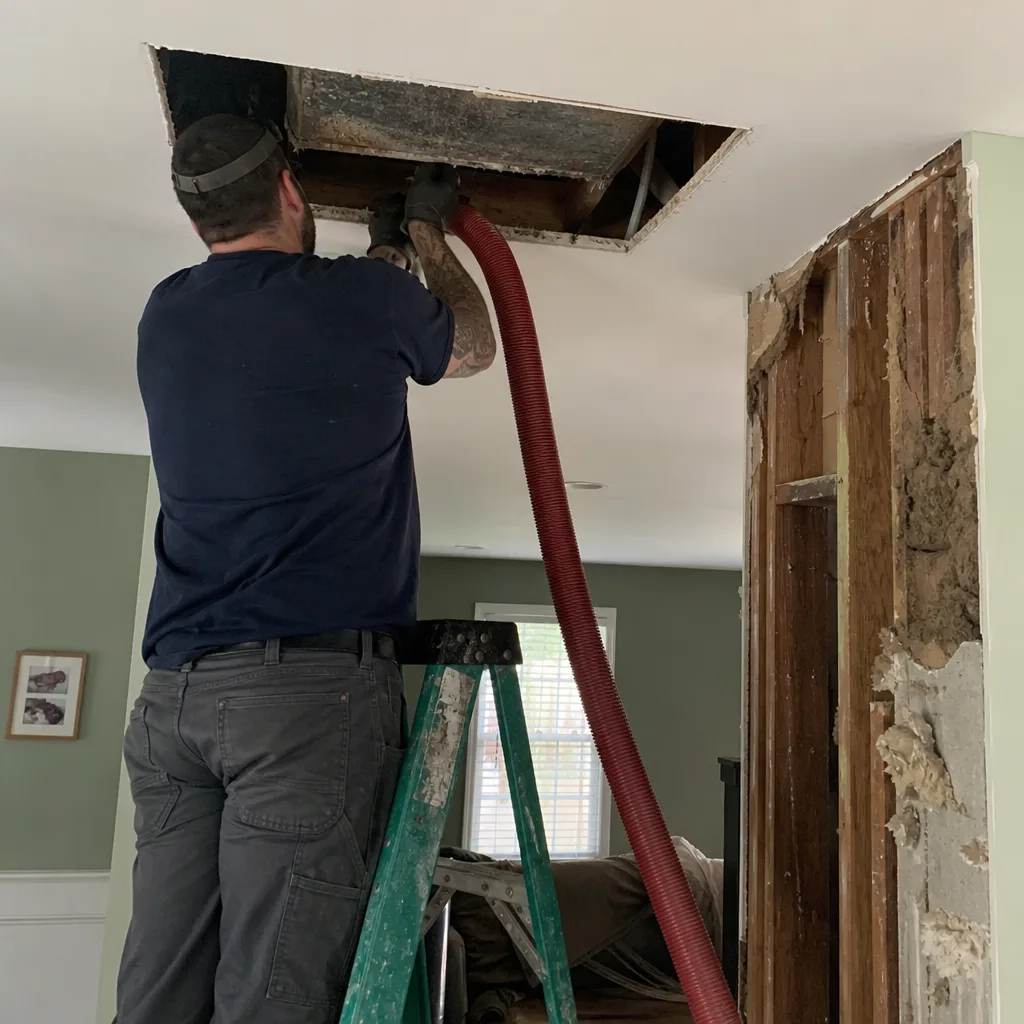 Before
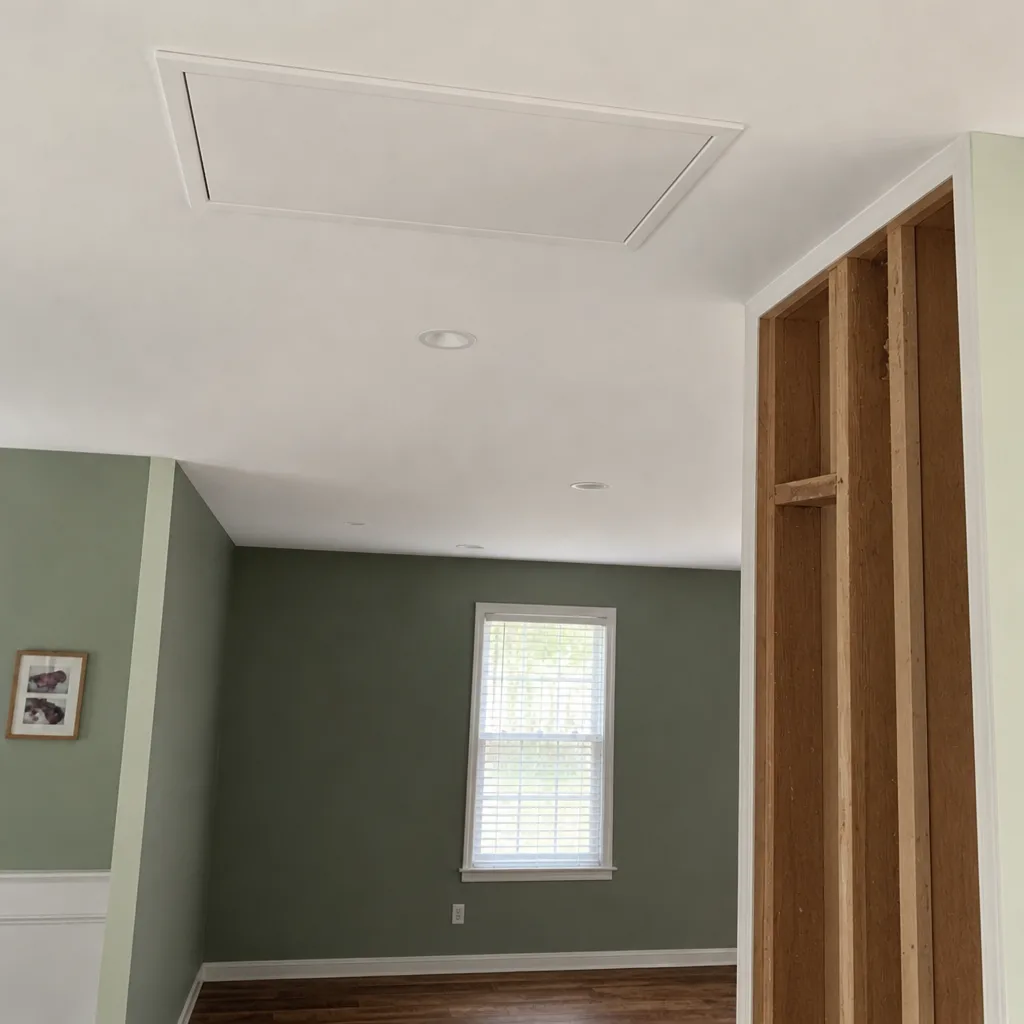 After
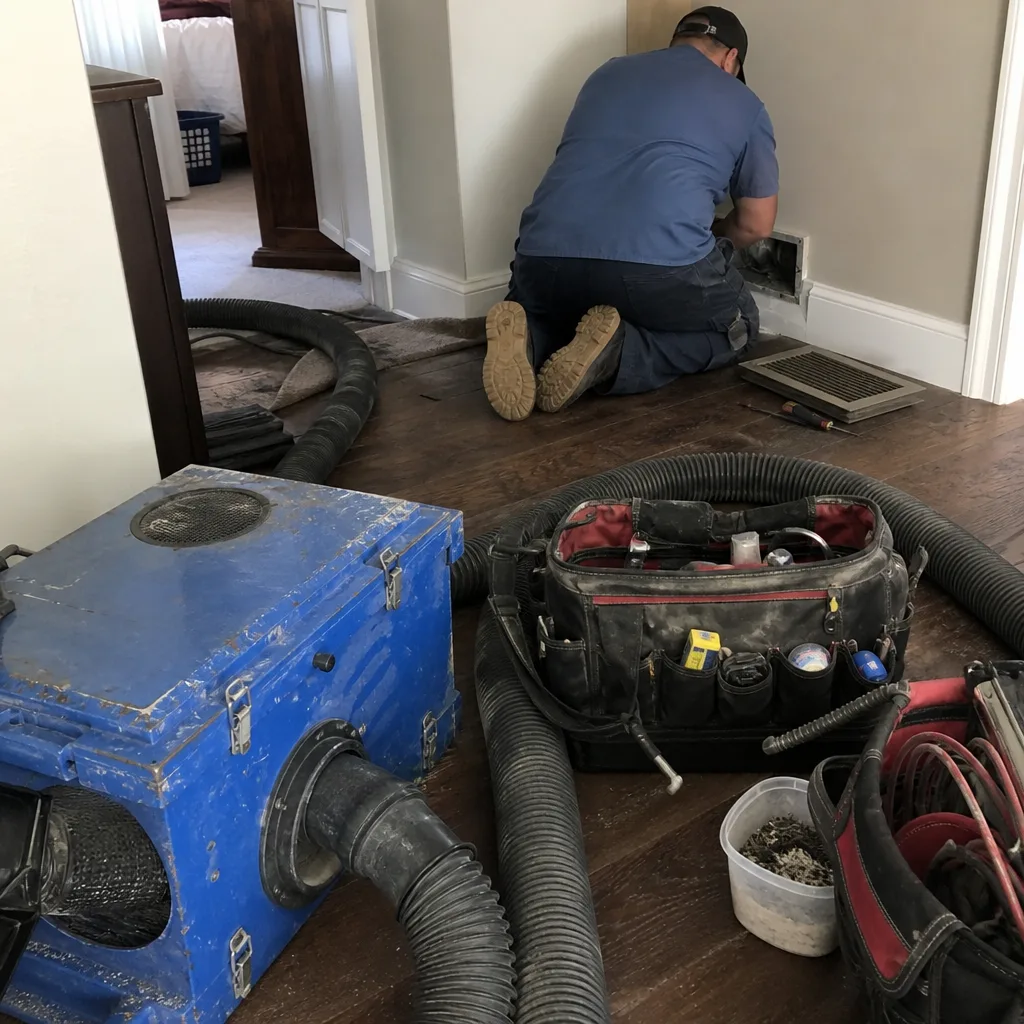 Before
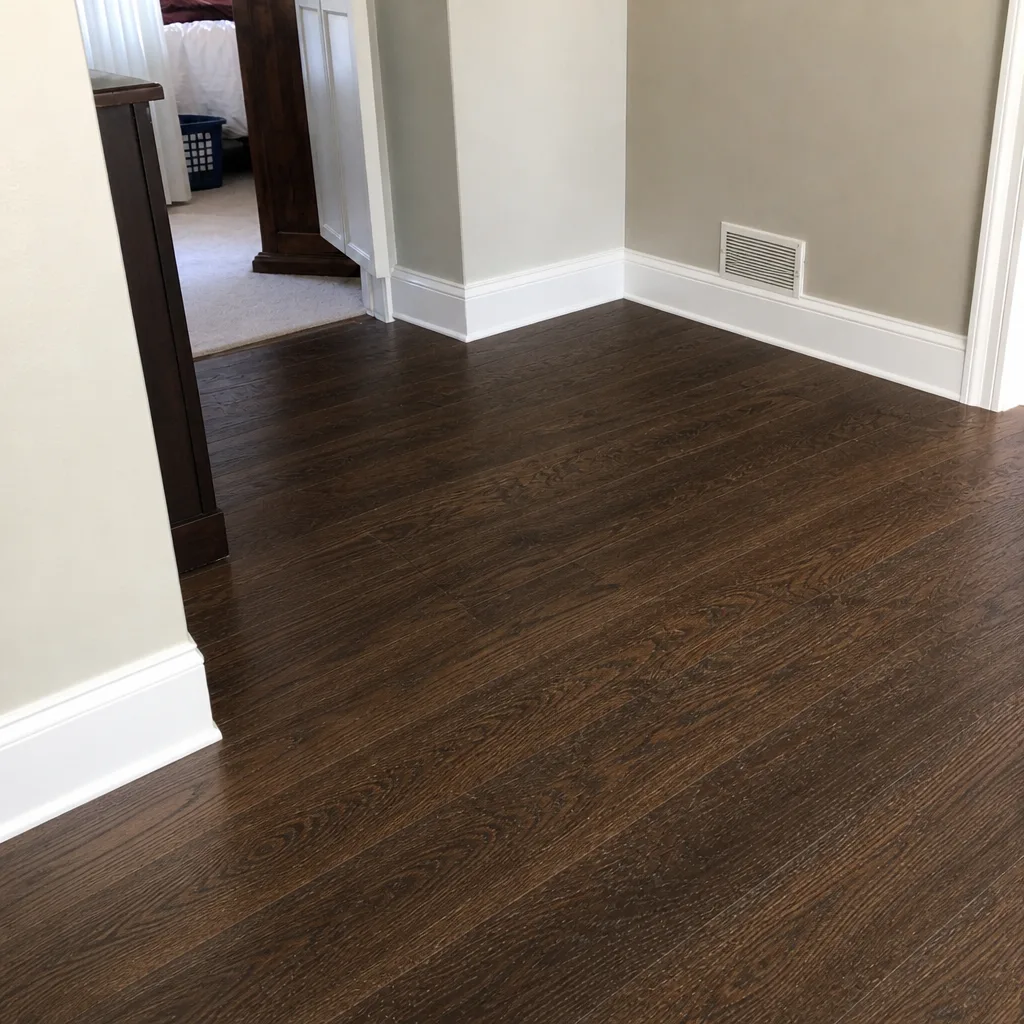 After
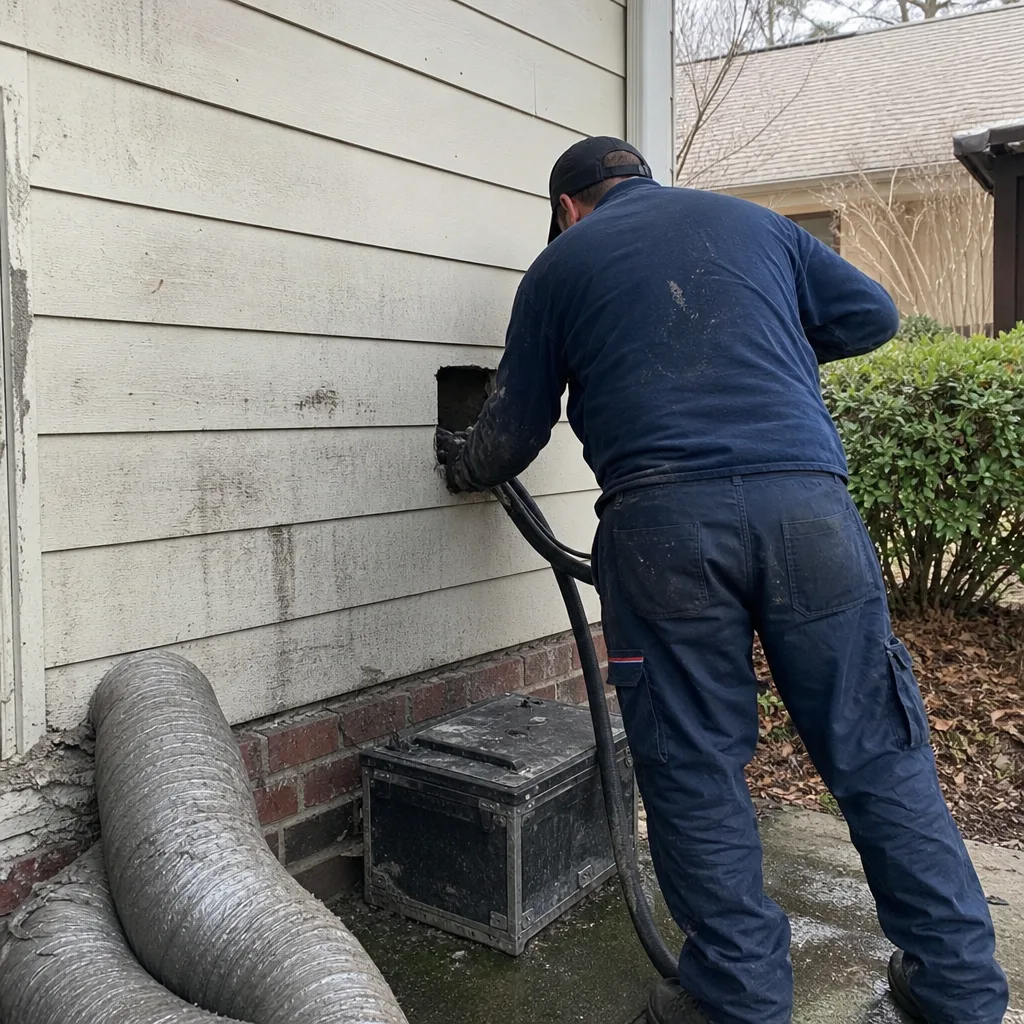 Before
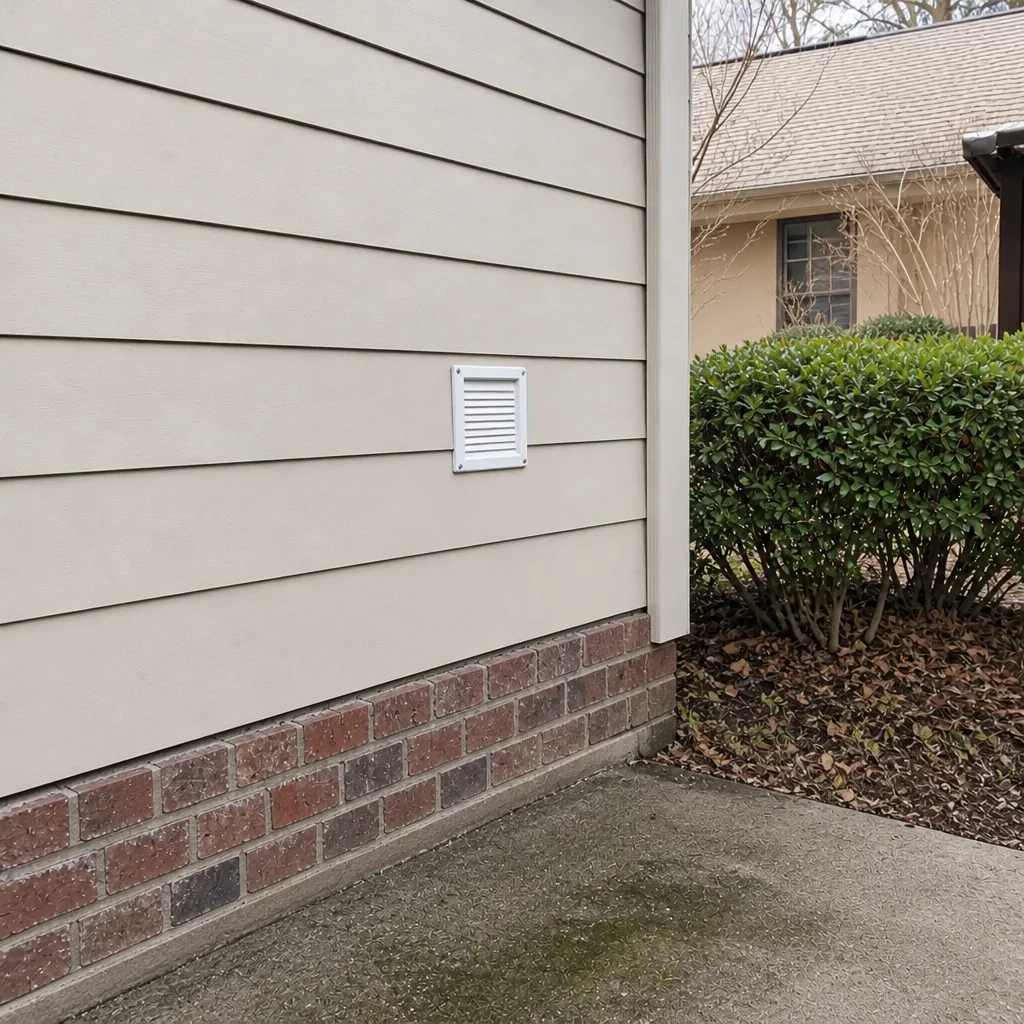 After
When to Call a Professional
Most of the calendar above is work you can do yourself. The actual cleaning, the coil and plenum inspection, the repair and sealing, the sanitizing, and the condition assessment should be done by a trained professional with the equipment to do it properly. That means mechanical brush systems and HEPA vacuuming, capturing debris rather than redistributing it, not a shop vac and a leaf blower. Call a professional if you’re seeing any of the following:
- Visible dust plumes or dark debris coming from supply registers when the system starts
- A musty or mildew smell anywhere in the air stream
- Unexplained allergy or asthma symptoms that get worse inside the home
- Recent renovation, water damage, or pest intrusion
- Any time a duct cleaning has not been done in five years or more, or was done previously without documentation
- Dryer cycles running consistently longer or dryer exterior getting hot
Air Duct Cleaning Dilworth offers free estimates in Dilworth – call (855) 337-2086. We answer 24/7, with fast dispatch from 7am to 7pm, Sunday through Friday. We use Rotobrush rotary brush systems and Nikro HEPA-rated vacuum equipment, and we walk you through what’s inside your system before and after. The local professional we connect you with is licensed and insured as their state requires, and the price is set per job by the written estimate – one flat price per system agreed before work starts.
Frequently Asked Questions
Every three to five years is the standard interval for a typical home, but in Dilworth the humid summers tend to push most homes toward the shorter end of that range. If you have pets, have done recent renovations, or have an allergy diagnosis in the household, plan for every two to three years instead. A professional inspection in late summer will tell you whether your specific home actually needs it.
Yes, for a specific reason: the cooling coil condenses moisture out of the air all summer, and if that moisture doesn’t drain away cleanly, it can establish biological growth on the coil, in the plenum, or on the duct surfaces downstream. A post-summer inspection catches moisture issues before the heating season, and it’s the best time of year for a cleaning in this climate. Cleaning alone won’t fix a moisture problem – those are addressed with a proper HVAC cleaning of the coil and drain assembly.
Filter discipline. A properly seated, correctly rated filter changed on schedule extends the interval; a loose filter that bypasses air or a loaded filter running past its change date compresses the interval regardless of anything else. It’s the cheapest thing to get right, too.
The price is set per job by the written estimate, based on the size and configuration of your system and what the inspection finds. We don’t quote per-vent pricing or teaser coupon figures because that’s the exact pricing model that leads to a small number quoted up front turning into a much larger invoice once the work starts. The written estimate you receive before any work begins is the price. Call (855) 337-2086 for an exact quote – estimates are free.
Because they’re often quoting a partial service: supply vents only, no return side, no plenum, no coil inspection, and equipment that isn’t equipped to capture fine debris the way a HEPA-rated vacuum does. Some entries are meant to get the technician into the home, where the real price is negotiated. The honest comparison is what’s actually included, and whether the provider will document before-and-after condition. Call (855) 337-2086 and we’ll explain exactly what our inspection covers.
Before-and-after photos of your own system, taken from the same position, plus a documented walk-through with the technician at the start and end of the job. That’s the process we use: we walk you through what we find, show you the inside of the system, and leave you with the documentation so your next decision is based on evidence rather than a sales pitch. If a provider can’t show you the condition inside your own system before and after, that’s the answer. Call (855) 337-2086 to set up a free estimate.
Yes. Drywall dust and construction debris are among the most aggressive contaminants a duct system will encounter, and that material finds its way into the return trunk even if grilles were taped off during the work. Treat a significant renovation as a reset event and get the system cleaned within a few months after completion. A joint and seam check should be part of that visit, because construction dust can infiltrate marginally sealed connections.
Once a year for most households, and more often for large families, households that run the dryer frequently, or anyone whose dryer cycle time has been creeping up. Treat it as a safety item, not just a maintenance item. It also serves as a useful leading indicator that the main duct system may be loading at a similar rate.
The Bottom Line
The “every three to five years” number is a starting point, not a schedule. Build your actual interval around four variables – pets, renovation activity, allergy diagnoses, and filter discipline – and expect it to fall somewhere between every two years and every seven. In Dilworth’s humid climate, the single most useful thing you can do is inspect in late summer, after the cooling season has done its work, and clean before the heating season begins. Between cleanings, keep a filter log, watch your return grilles as a load meter, and get the dryer vent on an annual cycle. After any professional cleaning, document the baseline with before-and-after photos. When the next inspection comes around, the decision takes care of itself. Call (855) 337-2086 to schedule a free estimate – we answer 24/7, with fast dispatch from 7am to 7pm, Sunday through Friday.
Written by the team at Air Duct Cleaning Dilworth.