
Last updated November 25, 2026
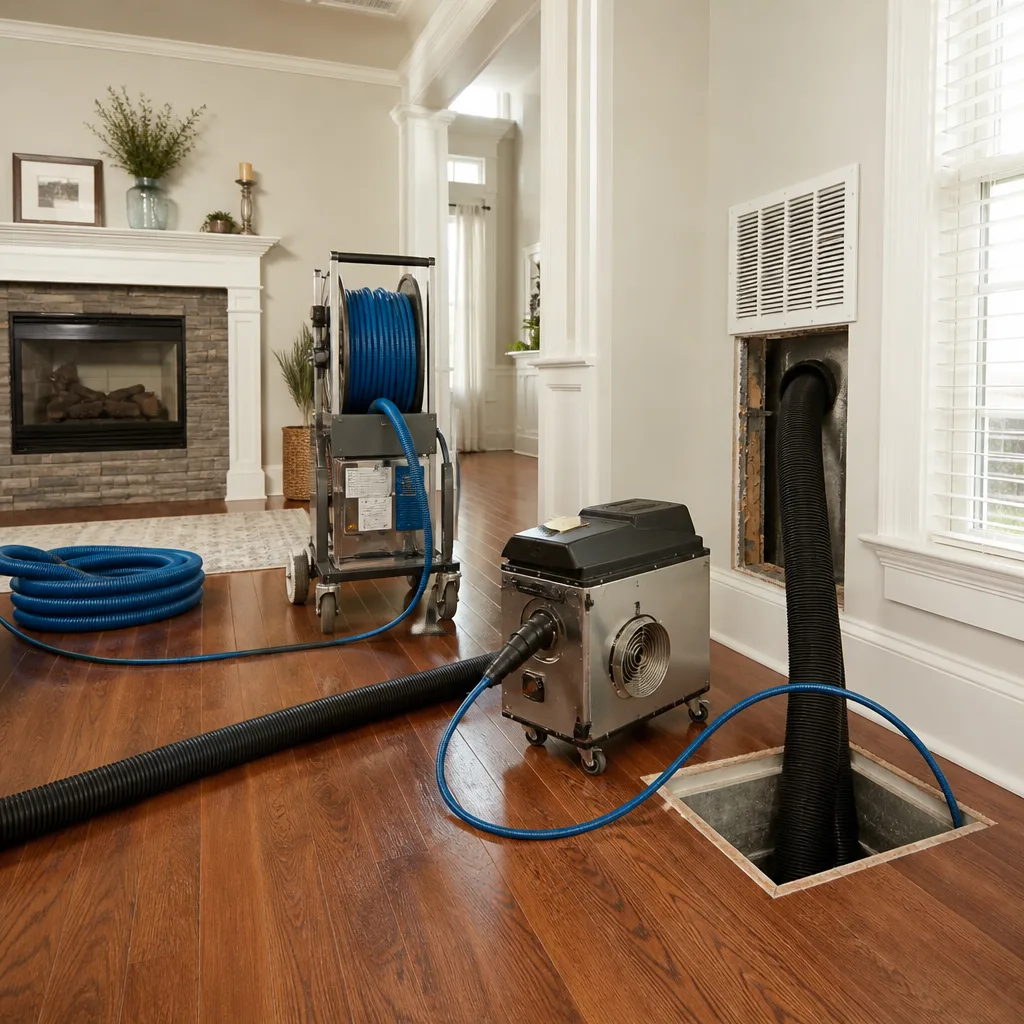 Whole-home duct cleaning
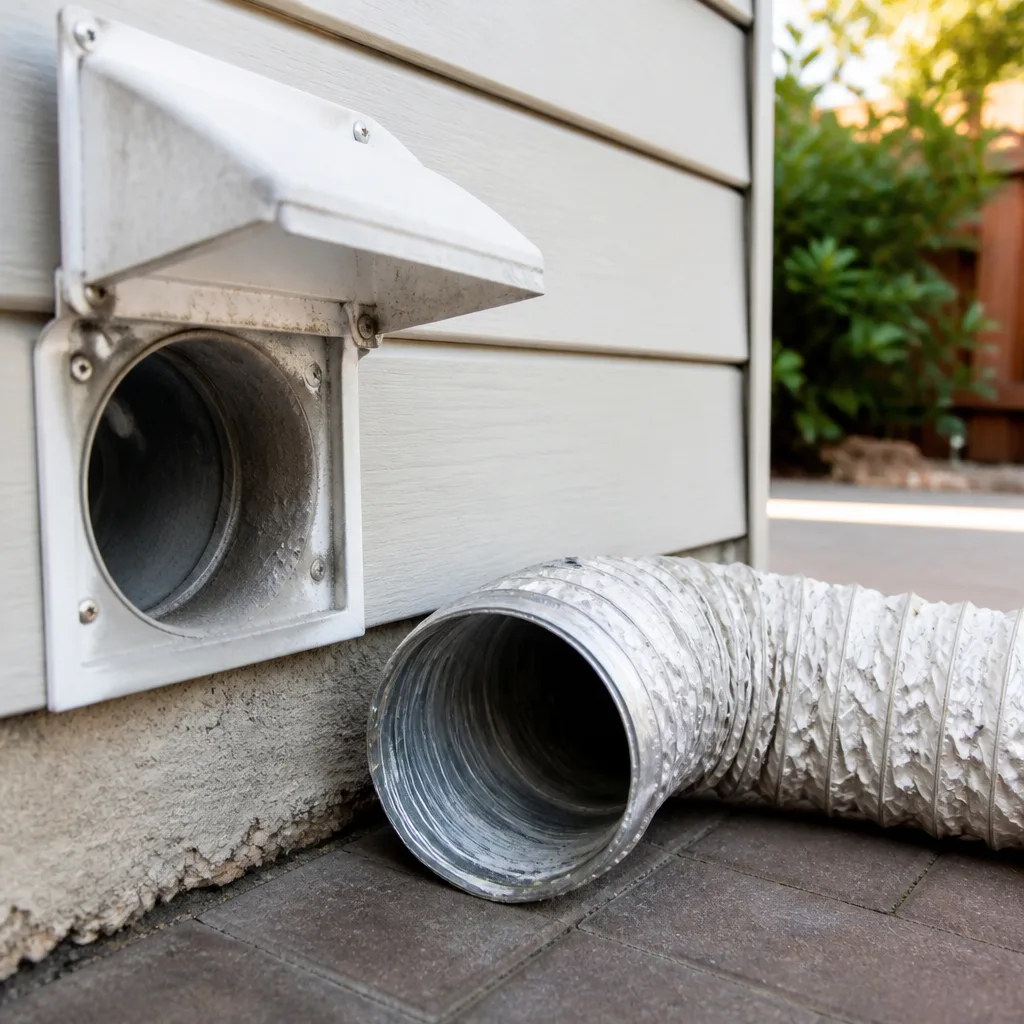 Dryer vent cleaning
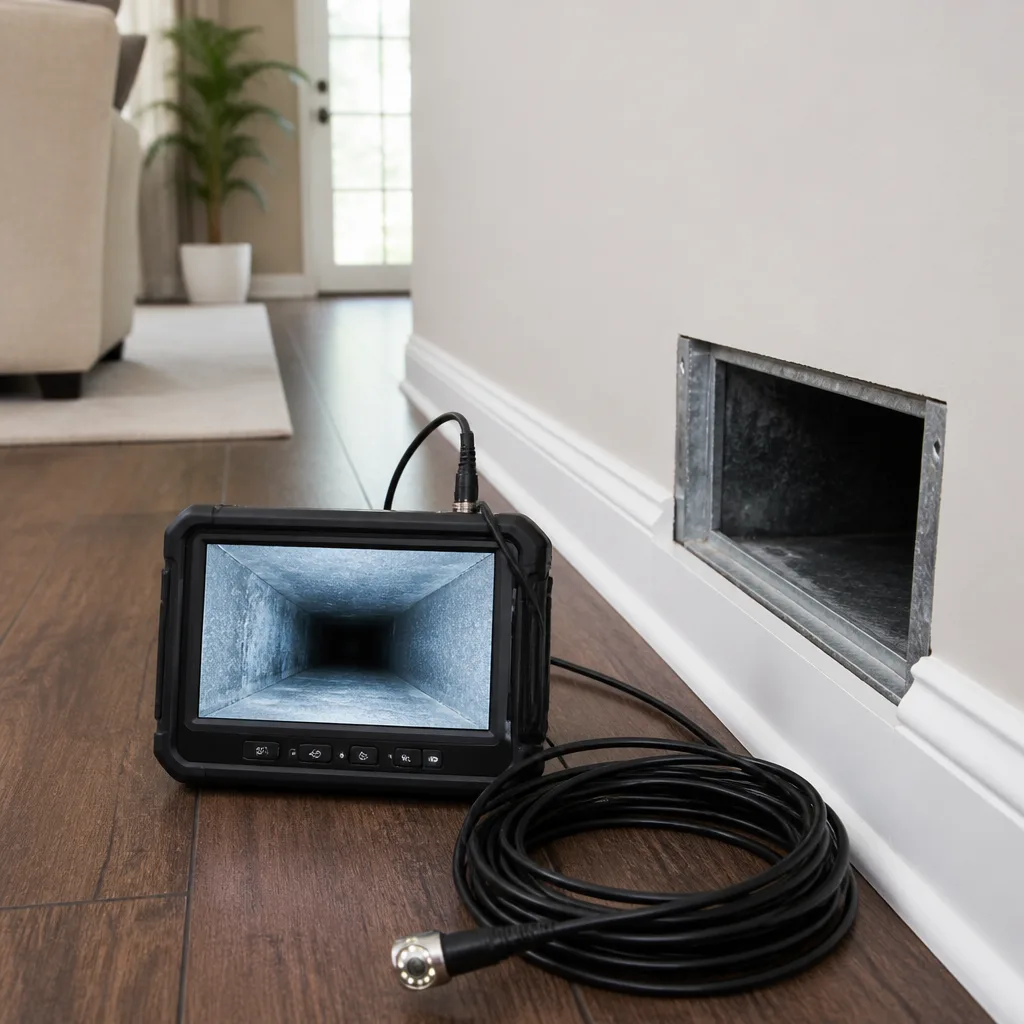 Camera inspection
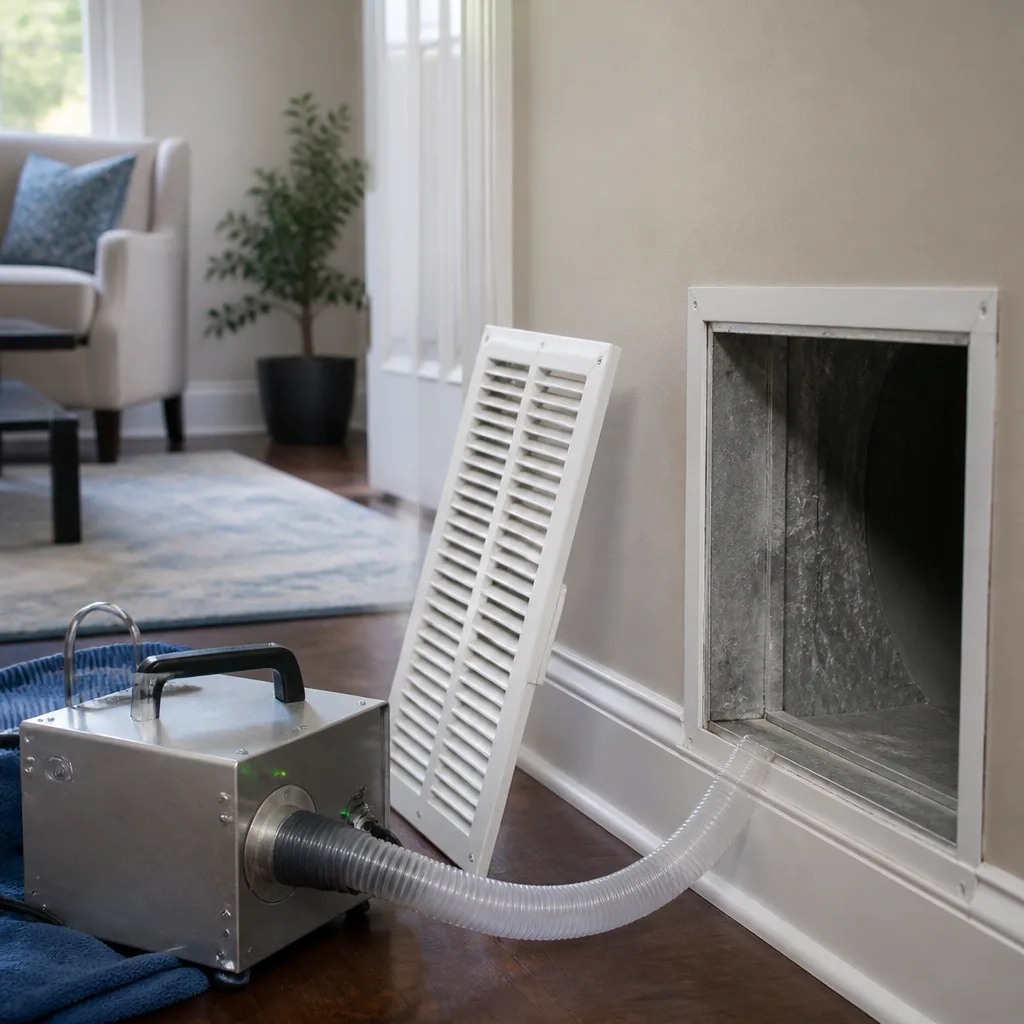 Sanitizing & deodorizing
Whole-system duct and dryer vent check with before-and-after photos - you see exactly what came out of your vents
That "$99 whole-house special" is a bait ad - the real number appears once they are in your hallway, or the "clean" is a shop-vac at the register. We photograph the inside of your ducts before and after instead.
The Complete Guide to Air Duct Cleaning in Dilworth
Two houses on the same Dilworth block can have almost nothing in common inside their walls. One is a mid-century ranch with the original rigid metal trunk line and short branch runs; the next lot over is a newer infill build with long spans of flexible duct, a sealed air handler closet, and a completely different contamination profile. A cleaning protocol that treats both the same way misses what actually matters in each. That’s the problem with most duct cleaning advice you’ll read: it describes a generic national service instead of the system in front of it. This guide maps the real process to Dilworth’s housing stock, its HVAC layouts, and the Piedmont climate, so you know exactly what should happen inside your ducts, what the equipment actually does, and how to confirm the work was done.
Quick Answer
Air duct cleaning in Dilworth means mechanically removing built-up dust, debris, and microbial growth from the entire air pathway, not just the visible vents. A proper source-removal job uses negative pressure and HEPA collection to capture what’s loosened, agitates the duct walls with rotary brushes or air whips, and includes the return side and air handler cabinet. In Dilworth’s humid summers and mixed housing stock, the job should be scoped to your specific duct material and layout, and verified with before-and-after airflow readings or camera inspection.
Styles & brands we work with
- Whole-home duct cleaning
- Dryer vent cleaning
- Camera inspection
- Sanitizing & deodorizing
Table of Contents
- Why Dilworth Homes Need a Different Approach
- Duct Materials in Dilworth: Flex vs. Rigid Metal
- What Source Removal Actually Involves
- The Full Air Pathway: What Gets Cleaned and What Doesn’t
- Humidity, Mold, and Cleaning Frequency in Dilworth
- How to Verify the Work Was Actually Done
- Repair and Seal, Not Just Clean
- How to Choose a Duct Cleaning Provider in Dilworth
Why Dilworth Homes Need a Different Approach
Dilworth sits in the Charlotte Piedmont, which means long, humid summers and a shoulder season that stays warm well into fall. That climate is hard on ductwork. When cooled air moves through a duct system and the attic or crawlspace around it is hot and damp, condensation forms on cold surfaces. Moisture plus settled dust is the recipe for microbial growth on duct liners and inside the air handler cabinet. It’s a slow process, but it’s persistent, and it’s the reason duct cleaning in Dilworth is less about appearance and more about the health of the whole system.
The housing stock makes it more complicated. Dilworth has a deep inventory of mid-century homes, many with original or partially updated ductwork, sitting beside newer construction where the duct layout was designed around a tighter building envelope. An older home might have a rigid metal trunk with short flex branches added during a renovation. A newer home might be almost entirely flexible duct with fewer, longer runs. Those two systems behave differently under cleaning pressure, respond to different agitation tools, and accumulate debris in different places.
There’s also the renovation factor. Dilworth sees steady remodeling and infill construction, and any project that opens walls or moves ceilings sends drywall dust and debris into the return system. That dust doesn’t disappear when the project ends. It settles into the return plenum and the air handler, and it gets pulled through the blower every time the system runs. A home that’s recently been renovated usually needs the return side cleaned first, before anything else.
None of that is a reason to panic about your ducts. It’s a reason to have the job scoped to your actual system instead of accepting a flat-rate offer based on vent count. Our technicians have up to 9 years of experience reading these systems, and the first thing worth knowing is what kind of ductwork you have.
Duct Materials in Dilworth: Flex vs. Rigid Metal
Flexible duct and rigid metal duct require different cleaning setups. Flex duct is a corrugated plastic inner liner wrapped in insulation, and the ridges of that liner trap debris. It’s also fragile; too much brush pressure or a poorly controlled air whip will tear the liner, and a torn liner becomes a collection point for moisture and mold. Rigid metal duct has a smooth interior that’s easier to agitate, but it’s often sealed with mastic and tape at the joints, and those seals can fail as the ductwork ages. Cleaning one like the other is how systems get damaged.
Here’s how the two systems differ in practice:
- Negative pressure setup: Flex duct needs gentler, more evenly distributed vacuum pressure so the liner isn’t collapsed. Rigid metal can take stronger negative pressure because the walls don’t deform.
- Agitation tools: Flex gets soft-bristle rotary brushes or controlled air whips. Rigid metal can take firmer brushes and more aggressive whip action.
- Access points: Rigid metal often allows cutting and resealing access holes at strategic points. Flex is usually accessed at the boot and the plenum, with less room to maneuver.
- Contamination pattern: Flex collects debris in the liner ridges along its whole length. Rigid metal tends to collect at low points, elbows, and the trunk-to-branch transitions.
- Repair likelihood: Older rigid metal in Dilworth homes often has failing joint seals that should be resealed during cleaning. Flex is more likely to need section replacement if the liner is already compromised.
This is where professional-grade equipment matters. A consumer shop vac or a leaf blower can’t generate the controlled negative pressure these systems need, and it can’t agitate a 30-foot flex run without either missing the debris or damaging the liner. air duct cleaning done with the right tools is a mechanical process with real settings, and the technician should be able to tell you which configuration your system calls for and why.
What Source Removal Actually Involves
Source removal is the industry term for actually extracting debris from the duct system rather than blowing it around. The key distinction is containment: everything loosened inside the duct has to be captured before it can re-enter your living space. That’s what separates a real cleaning from the “blow and go” approach that gives the whole category a bad reputation.
Here’s what a proper source removal cleaning looks like, step by step:
- System inspection and access setup. The technician maps the duct layout, identifies the duct materials, and creates access points at the plenum, trunk, and key branch runs. Access is cut and later resealed, not left open.
- Negative pressure established. A HEPA-rated vacuum unit connects to the system and pulls the entire duct network into negative pressure. Air flows toward the collection unit, not into the house. Nikro HEPA-rated equipment is built for this; the filtration captures fine particulate rather than exhausting it back into the room.
- Mechanical agitation. Rotary brush systems like Rotobrush feed a spinning brush through the duct runs, scrubbing the walls and loosening adhered debris. Air whips handle tight or irregular sections where a brush can’t reach. Contact vacuuming with HEPA tools handles the plenum, air handler cabinet, and coil housing.
- Containment during the work. Abatement Technologies HEPA filtration devices bring remediation-level containment to the job site, capturing airborne particulate at the source instead of letting it settle elsewhere in the house.
- Return side and air handler. The return ducts, return plenum, blower compartment, and coil housing get the same treatment. Cleaning only the supply side leaves the largest debris reservoir untouched.
- Verification and resealing. Access points are resealed, airflow is checked, and the technician walks the homeowner through what was removed and what the system looks like now.
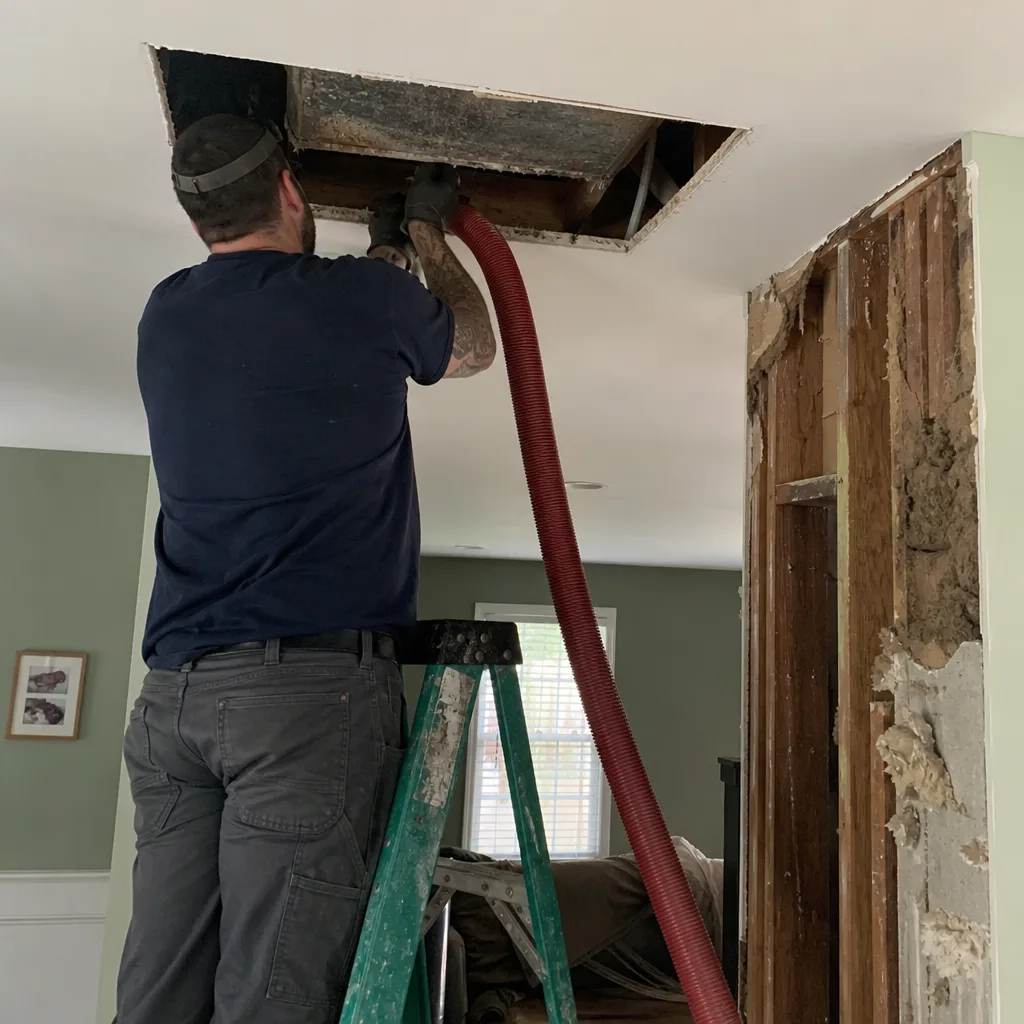
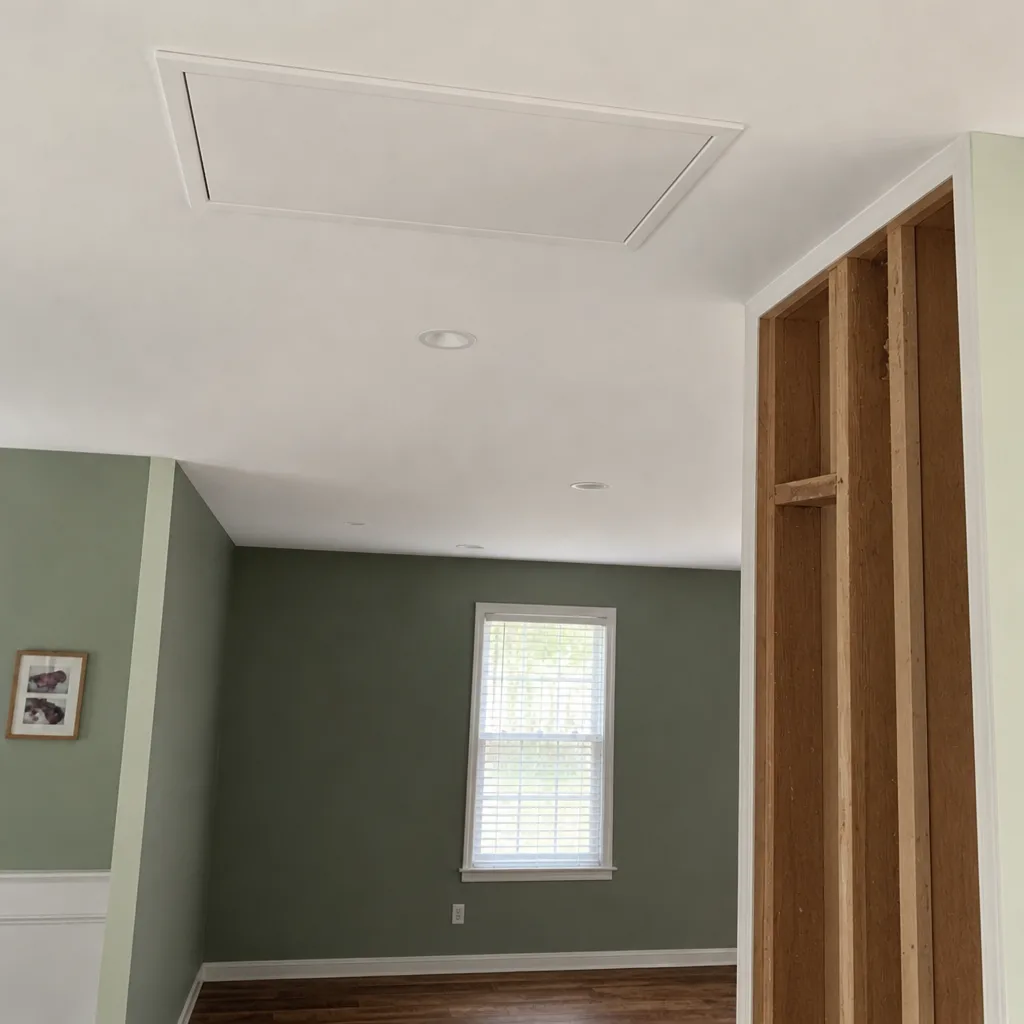
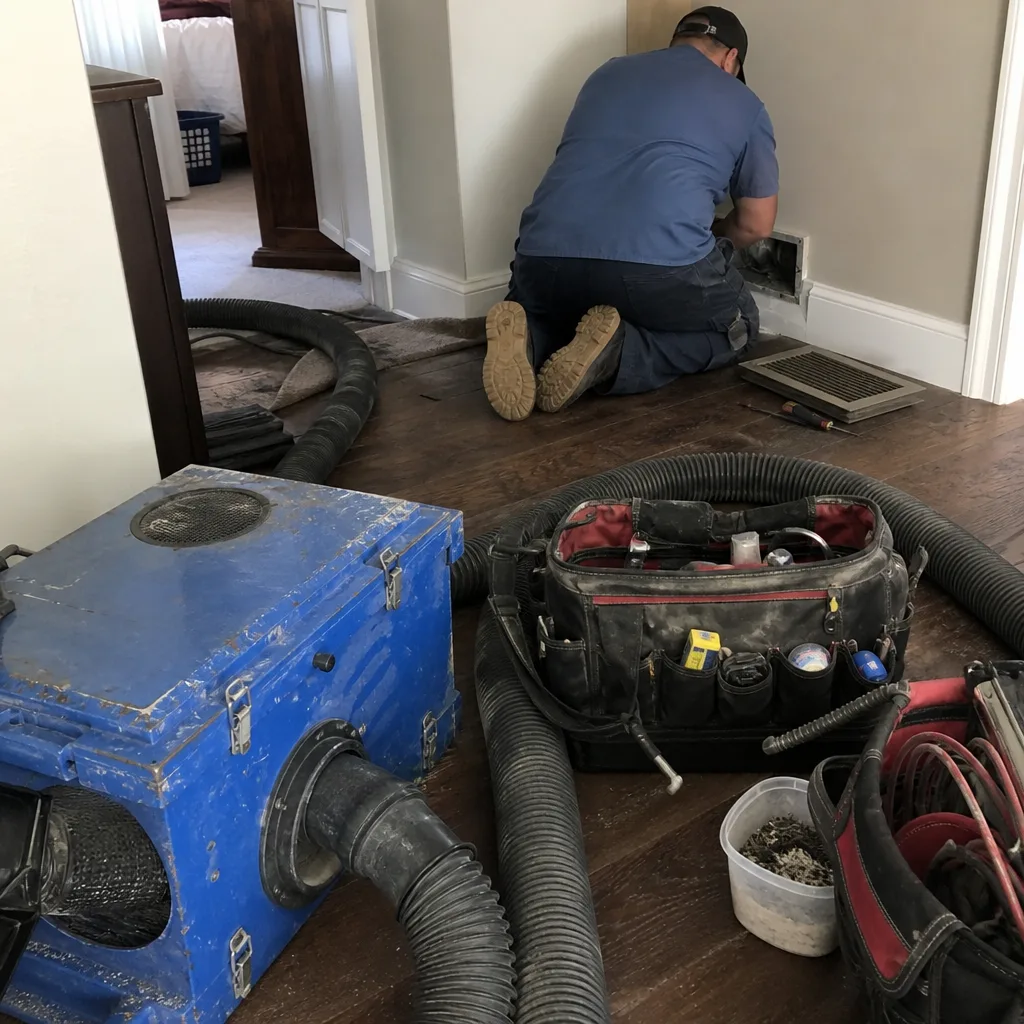
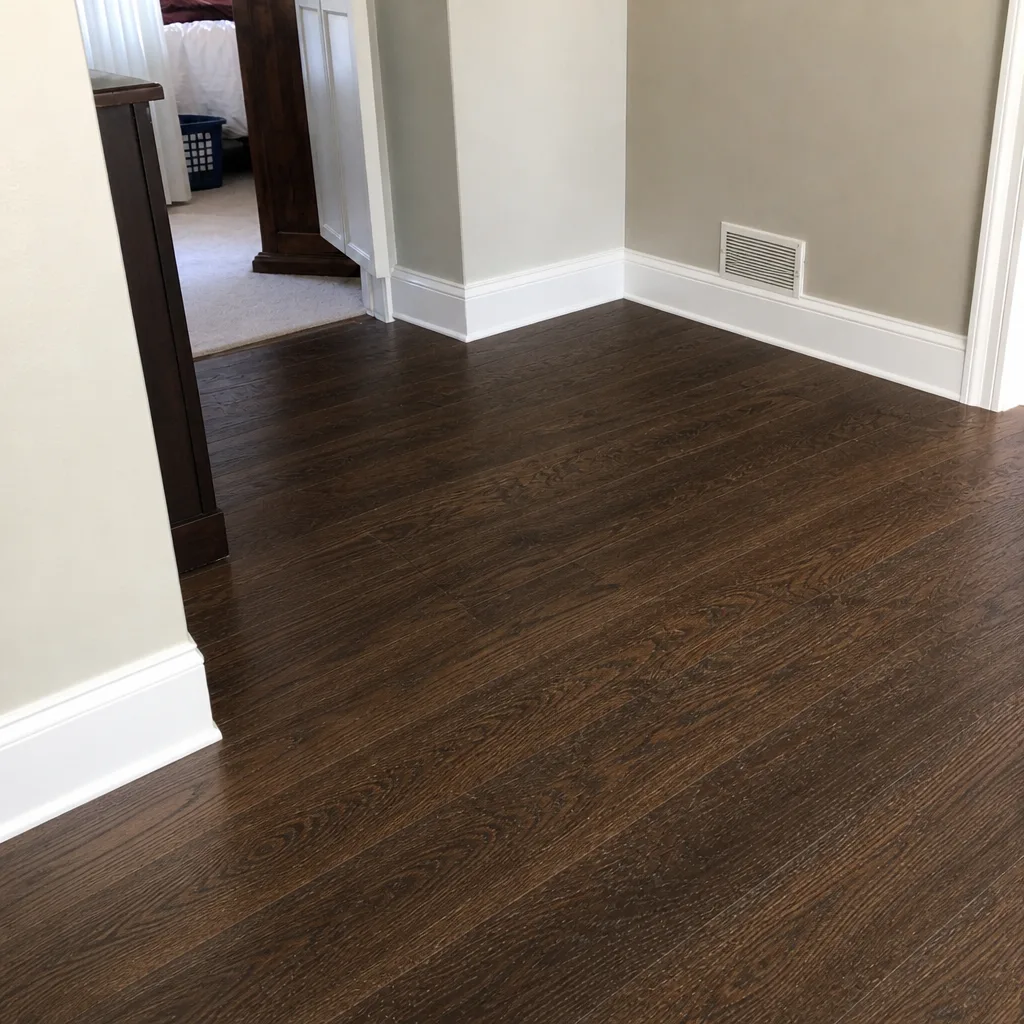
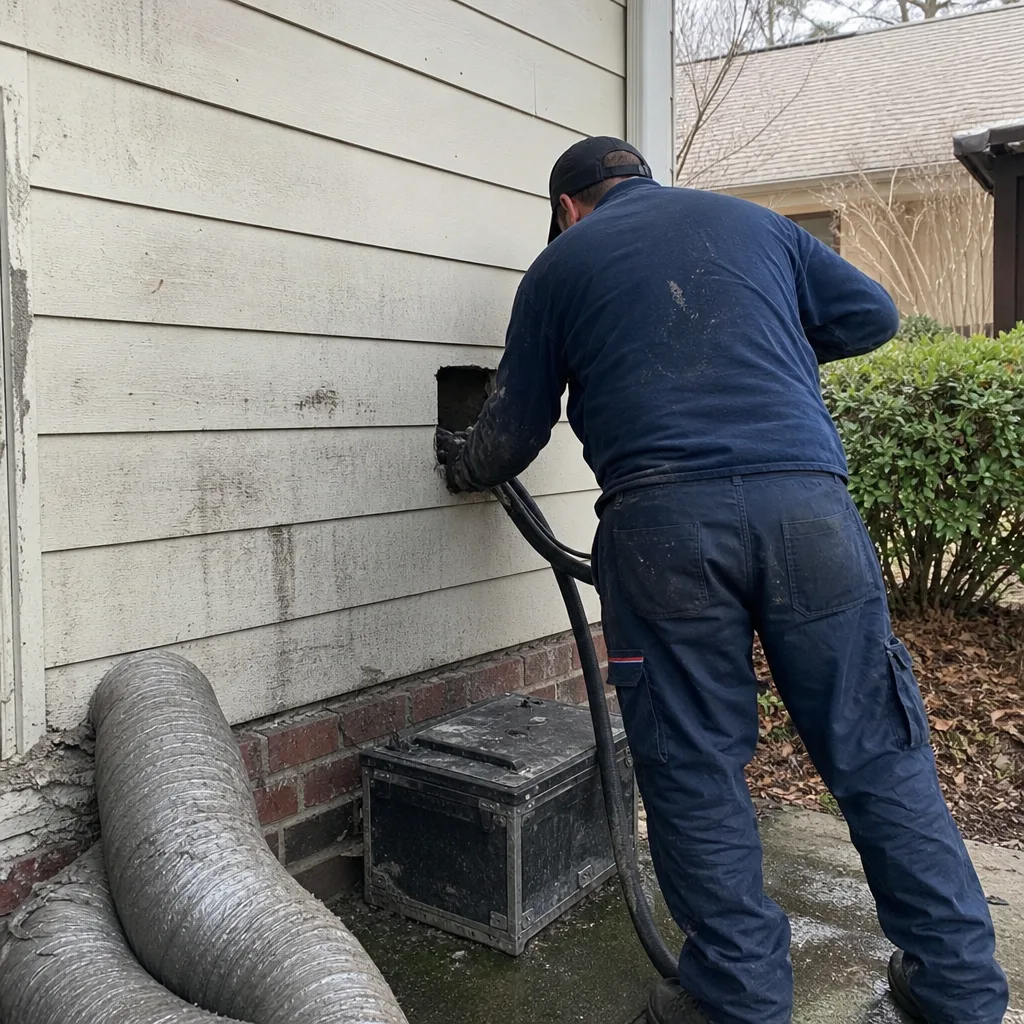
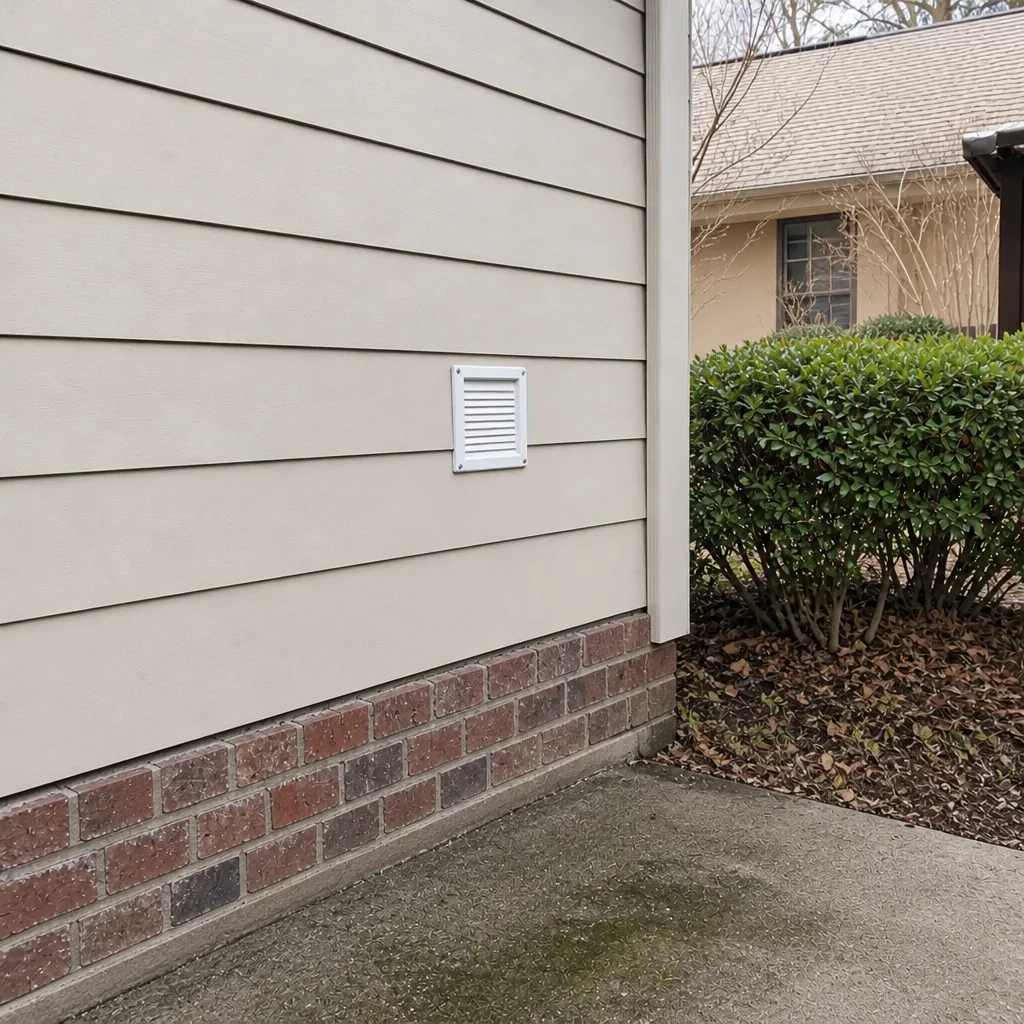
That last step is where transparency lives. You should see before-and-after photos of your own ducts, not stock images. You should get a walk-through of the work, not a handshake at the door. And you should be able to ask what the airflow readings were before and after.
The Full Air Pathway: What Gets Cleaned and What Doesn’t
Most cheap duct cleaning stops at the visible supply vents. That’s a fraction of the system and usually the cleanest part of it. The full air pathway runs from the return grilles through the return ducts, into the return plenum, through the air handler cabinet and coil housing, into the supply plenum, and out through the supply trunk and branch runs to the registers. Debris concentrates where air slows down and changes direction: the return plenum, the air handler cabinet, the coil, and the transitions between trunk and branch.
Here’s what a complete air pathway scope includes:
- Return grilles and return ducts: Often the dirtiest part of the system. Dust, pet hair, and debris settle here first.
- Return plenum: The collection chamber before the air handler. Renovation dust and settled debris accumulate here.
- Air handler cabinet: The blower compartment. Dust builds on the blower wheel and the cabinet walls, and a dirty blower wheel reduces airflow across the whole system.
- Coil housing: The evaporator coil sits inside a housing that collects dust and, in humid conditions, moisture. A dirty coil loses cooling capacity and becomes a microbial growth surface.
- Supply plenum and trunk: The distribution point. Debris collects at the plenum floor and along the trunk.
- Supply branch runs and registers: The visible end of the system, and the easiest to check visually.
Cleaning only the supply vents is like vacuuming the doorway of a room and calling the room clean. In Dilworth’s humid summers, the return side and coil housing are where the real problems live, and a provider that skips them isn’t cleaning your system. If you’re also dealing with a system that hasn’t been serviced in years, HVAC cleaning covers the mechanical side of the unit itself, which pairs naturally with a full duct cleaning.
Humidity, Mold, and Cleaning Frequency in Dilworth
Dilworth’s climate means duct systems here face more moisture stress than systems in drier parts of the country. Charlotte-area summers run humid, and when cooled air moves through ducts in a hot attic or crawlspace, condensation forms on the cold surfaces. That moisture is the limiting factor for microbial growth. Where there’s moisture and settled dust, there’s a growth surface. Where there’s just dust and dry air, the problem stays mostly cosmetic.
So how often does duct cleaning actually need to happen in Dilworth? There’s no single number that applies to every home, and any provider quoting one without looking at your system is guessing. A reasonable frame:
- Every 3 to 5 years for a typical home with no compounding factors.
- Sooner if you’ve had a renovation that generated drywall dust or debris.
- Sooner if you have pets, allergies, or a household member with respiratory sensitivity.
- Sooner if you’ve noticed visible dust on registers shortly after cleaning, musty odors when the system starts, or uneven airflow between rooms.
- Sooner if the home has had water intrusion or a known moisture problem in the attic or crawlspace.
One helpful addition is a filtration upgrade. Honeywell and Aprilaire air quality systems give the duct system better filtration at the source, which slows how fast the ducts load up between cleanings. We install and service both, so a cleaning can end with a plan for keeping the system cleaner going forward rather than just resetting the clock.
Sanitizing is worth separating from cleaning. Cleaning removes the debris; sanitizing treats surfaces after the debris is gone. Doing one without the other doesn’t accomplish much. An antimicrobial application on clean duct surfaces, using products like Guardsman-grade protective treatments, makes sense after a thorough cleaning has removed the growth medium. It doesn’t substitute for the cleaning itself.
How to Verify the Work Was Actually Done
Verification is where this industry earns or loses trust, and it’s where you should pay attention. A technician’s word at the door isn’t verification. What you want is evidence you can see and readings you can compare. Here’s what a verifiable job looks like:
- Before-and-after photos of your own system. Specifically, the return plenum, the air handler cabinet, the coil, and a representative supply branch. Stock photos don’t count; the photos should show the same locations before and after.
- Camera inspection. A duct camera run through the supply and return branches shows the interior walls. This is the most direct proof that debris was removed from the length of the run, not just the visible end.
- Airflow readings. Static pressure or airflow measurements taken before and after give a numerical signal. If a system was significantly restricted, the change shows up in the readings.
- Debris quantity. A meaningful cleaning produces a meaningful volume of collected debris. The technician should be willing to show you what the HEPA unit captured.
- Walk-through. A qualified provider walks the homeowner through the work at the end. You should see the access points resealed, and you should be able to ask questions about what was found.
If a provider can’t offer photos, camera footage, or airflow readings, you’ve learned something useful before the work starts. Verification is the whole point of choosing a process-driven company, and it’s what separates Air Duct Cleaning Dilworth from the coupon-and-van offers you’ll see for the same service.
Repair and Seal, Not Just Clean
A cleaning that doesn’t address duct integrity is a cleaning that won’t last. Duct systems in Dilworth develop problems that cleaning alone can’t fix: sealed joints that fail as mastic dries and tape lifts, liner damage in flex duct, disconnected branch runs in attics where the ductwork has shifted, and gaps at the plenum connections. Every one of those gaps pulls unconditioned attic or crawlspace air into the system, and that air comes with dust, insulation fibers, and moisture. Clean the ducts and leave the gaps, and you’ve cleaned the system just in time for it to get dirty again.
Duct sealing and repair are part of the value of a full-system approach, not an upsell bolted onto it. A failed joint at the plenum is exactly the kind of thing a thorough inspection finds during cleaning, and it’s the kind of thing the technician should be able to fix on the same visit or schedule without a different vendor. That’s the reasoning behind the full air pathway scope: if the company doing the cleaning can also reseal a joint, replace a damaged flex section, or repair the plenum connection, the system ends the day tighter and cleaner than it started.
The same logic applies to the dryer vent, which is a separate system but a related one. Lint buildup in a dryer vent is a fire risk and a performance problem, and dryer vent cleaning uses the same mechanical brush-and-vacuum approach as duct cleaning. In Dilworth’s older homes, dryer vents often run long distances through interior walls and are easy to overlook until airflow drops or the dryer needs multiple cycles.
How to Choose a Duct Cleaning Provider in Dilworth
The question worth asking isn’t “who’s cheapest” but “what equipment are they bringing into my house.” Duct cleaning is an equipment-driven service. The difference between a legitimate job and a cosmetic one shows up in the machinery. Here’s what to look for, and what should raise a flag.
What to look for:
- HEPA-rated vacuum equipment, not a shop vac. HEPA filtration captures fine particulate instead of exhausting it into the room.
- Rotary brush systems for mechanical agitation, with different brush and tool configurations for different duct materials.
- Containment equipment for airborne particulate during the work, especially on renovation-dust jobs.
- A scope that includes the return side, air handler cabinet, and coil housing, not just supply vents.
- Verification: before-and-after photos, camera inspection, airflow readings.
- Duct repair and sealing as part of the service, not a referral to someone else.
What should give you pause:
- Per-vent pricing with no inspection of the system first.
- No containment, no HEPA, no camera.
- A cleaning scope limited to supply vents.
- No before-and-after documentation offered.
- A provider who can’t explain what duct materials you have or how their equipment handles each one.
The right approach is one flat price per system, agreed before the work starts, based on an inspection of what’s actually there. That’s how a source removal job should be priced in Dilworth, and it’s how you avoid the bait-and-switch pattern that makes homeowners hesitate to call anyone.
Common Mistakes to Avoid
- Accepting per-vent pricing without a system inspection. Vent count says nothing about the actual debris load, duct material, or contamination profile. A fair quote follows an inspection, not a phone call.
- Letting a provider skip the return side and air handler. The return plenum and air handler cabinet are usually the dirtiest parts of the system. Cleaning only the supply vents leaves the source of the problem untouched.
- Using a company without HEPA containment. Without proper negative pressure and HEPA collection, loosened dust ends up on your furniture and in the air you breathe. Containment is not optional.
- Treating flex duct like rigid metal. Over-aggressive agitation on flex duct tears the liner and creates a worse problem than the one you started with. Ask which tools and pressure settings the technician uses for your system.
- Skipping sanitizing after a humid Dilworth summer. Cleaning removes debris, but if there’s moisture-driven growth on the liner or coil housing, sanitizing after the cleaning is what treats the surface. Do them in that order, never the reverse.
- Cleaning without sealing failed joints. Gaps at the plenum and branch connections pull attic and crawlspace air back into the system. Clean, then seal, or the ducts won’t stay clean.
- Accepting a job with no verification. No before-and-after photos and no camera inspection means no way to confirm the work happened. Insist on both.
See the difference
 Before
 After
 Before
 After
 Before
 After
When to Call a Professional
Some duct problems are obvious and some aren’t. Call a professional when you notice visible dust on the registers shortly after a cleaning, a musty or stale smell when the system starts up, uneven airflow between rooms, or a recent renovation that generated dust the return system has been pulling ever since. Call if your system is older and hasn’t been serviced in years, if you’re dealing with allergy symptoms that seem tied to the HVAC system, or if you’ve had water intrusion in the attic or crawlspace where ductwork runs. These are all signs the system needs inspection before cleaning, not after. Air Duct Cleaning Dilworth offers free estimates in Dilworth – call (855) 337-2086 to schedule an inspection and get a flat price per system before any work begins.
We answer 24/7. Fast dispatch from 7am to 7pm, Sunday through Friday.
Frequently Asked Questions
Air duct cleaning in Dilworth is typically priced per system based on the size of the system, the number of runs, the duct materials, and how much contamination there is. Pricing is per system by estimate, not per vent, and the estimate sets the final price before work begins. Call (855) 337-2086 for an exact quote – estimates are free.
Cheap quotes are cheaper because they scope a smaller job: supply vents only, no HEPA containment, no return side, no air handler cabinet, and no verification. Those jobs leave the largest debris reservoirs untouched and can redistribute dust into your home. What’s being cleaned matters more than what’s being charged. Call (855) 337-2086 to understand what a full-system scope includes.
You know the work was done when you see before-and-after photos of your own ducts, camera footage of the duct interiors, and airflow or static pressure readings taken before and after the cleaning. A qualified provider walks you through the system at the end and shows you the access points they resealed. Call (855) 337-2086 to schedule a cleaning with verification included.
Most homes in Dilworth benefit from cleaning every 3 to 5 years, but that timeline shortens after a renovation, with pets or allergy concerns, or if there’s a moisture problem. Dilworth’s humid summers make microbial growth more likely than in drier climates, so homes with any moisture exposure should be checked sooner rather than waiting for the full interval. Call (855) 337-2086 for an inspection that matches your system.
Duct cleaning can reduce the dust and debris circulating through the system, which is often part of what allergy-sensitive households are reacting to, but it isn’t a medical treatment. What it does do is remove settled debris from the return side, air handler, and supply runs that the blower would otherwise pull into living spaces. Pairing the cleaning with a better filtration system, like a Honeywell or Aprilaire unit, slows how fast the ducts reload afterward. Call (855) 337-2086 to talk through what your system needs.
Sanitizing makes sense after a complete cleaning in homes with moisture exposure, microbial growth, or a musty odor. Cleaning removes the debris; sanitizing treats the surfaces once the debris is gone. Doing sanitizing without cleaning first doesn’t accomplish much. Call (855) 337-2086 to see whether your system needs the added step.
The Bottom Line
Duct cleaning in Dilworth isn’t a one-size service because the housing stock isn’t one-size. Flex duct and rigid metal need different pressure and agitation setups. The return side, air handler cabinet, and coil housing are where the real contamination lives, and cleaning only the visible vents is an incomplete job. Dilworth’s humid summers make moisture and microbial growth a real concern, so cleaning frequency should match the home, not a generic calendar. And verification – photos, camera footage, airflow readings – is how you know the work happened. One flat price per system, agreed before work starts, is how the job should be priced. If you want a system scoped to your actual ductwork, call (855) 337-2086 for a free estimate from Air Duct Cleaning Dilworth.
Written by the team at Air Duct Cleaning Dilworth.