
Last updated November 25, 2026
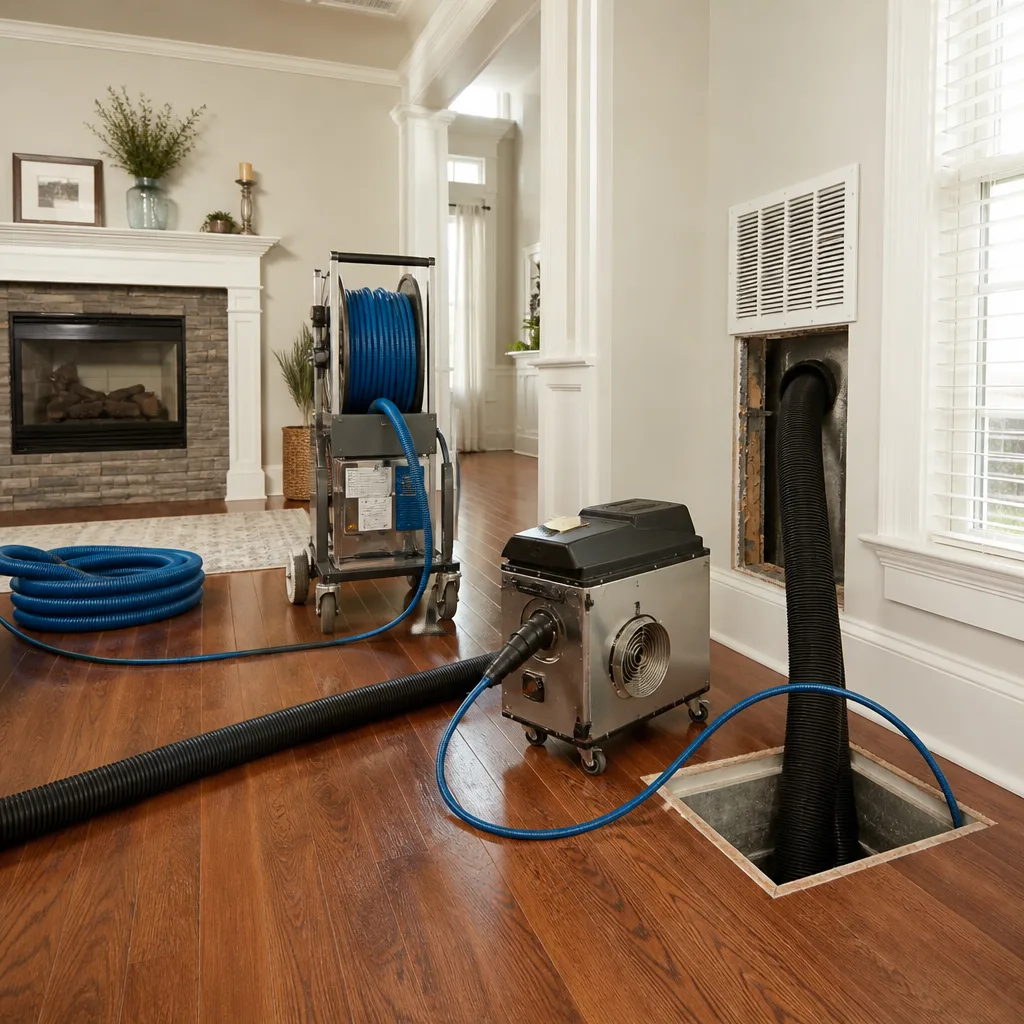 Whole-home duct cleaning
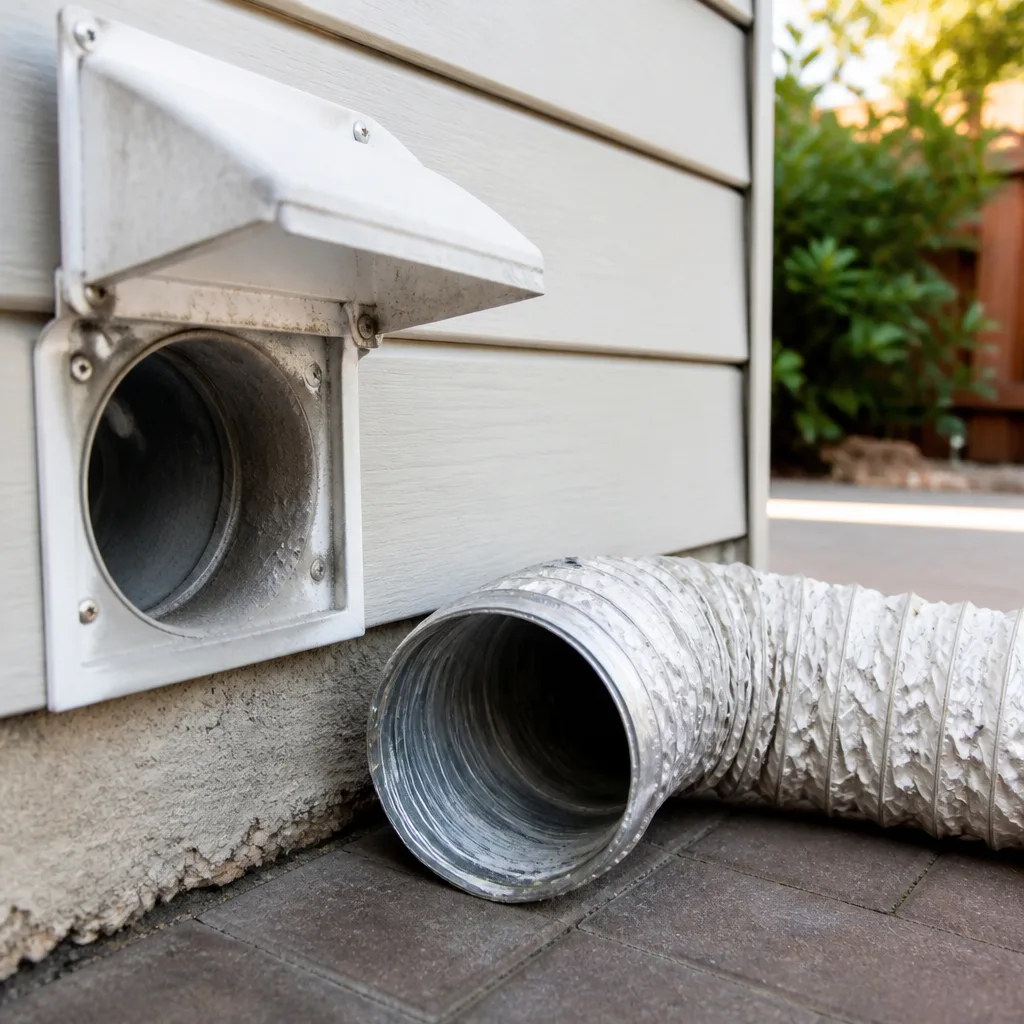 Dryer vent cleaning
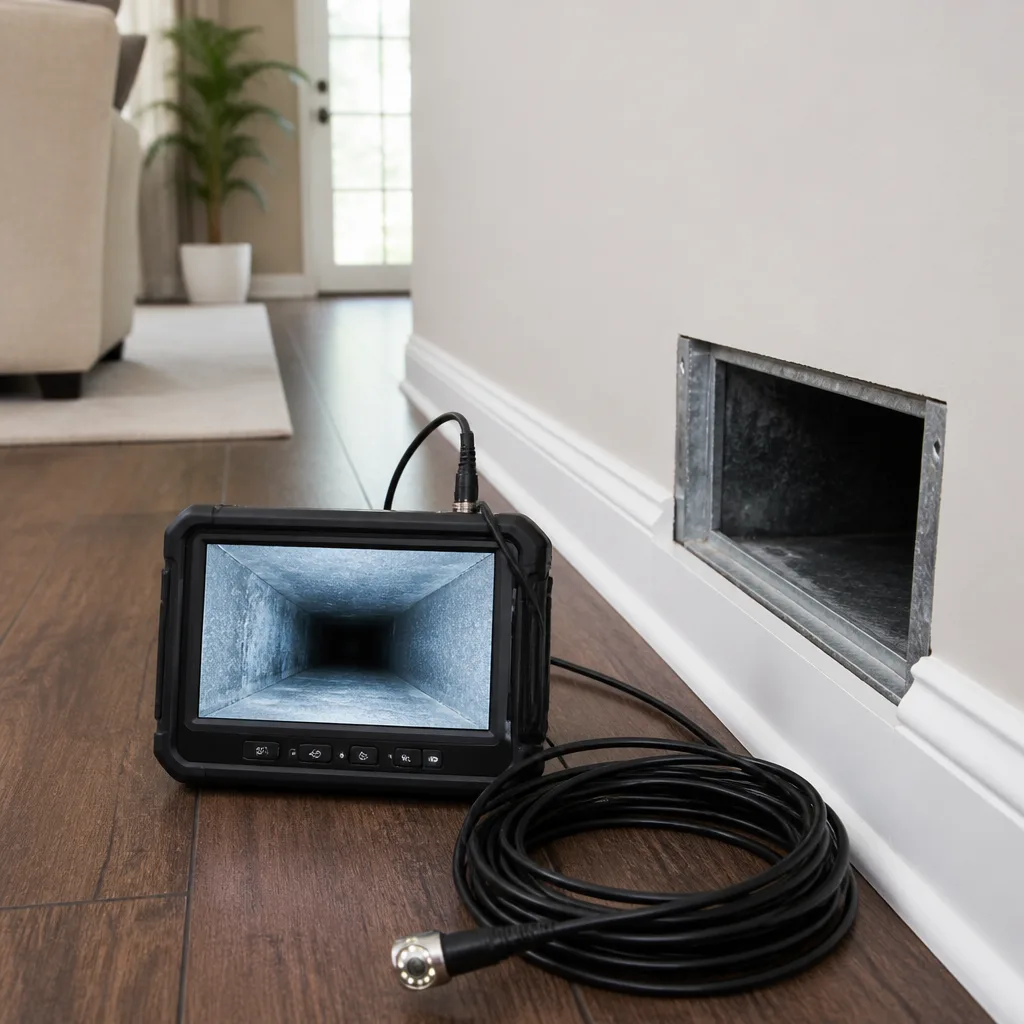 Camera inspection
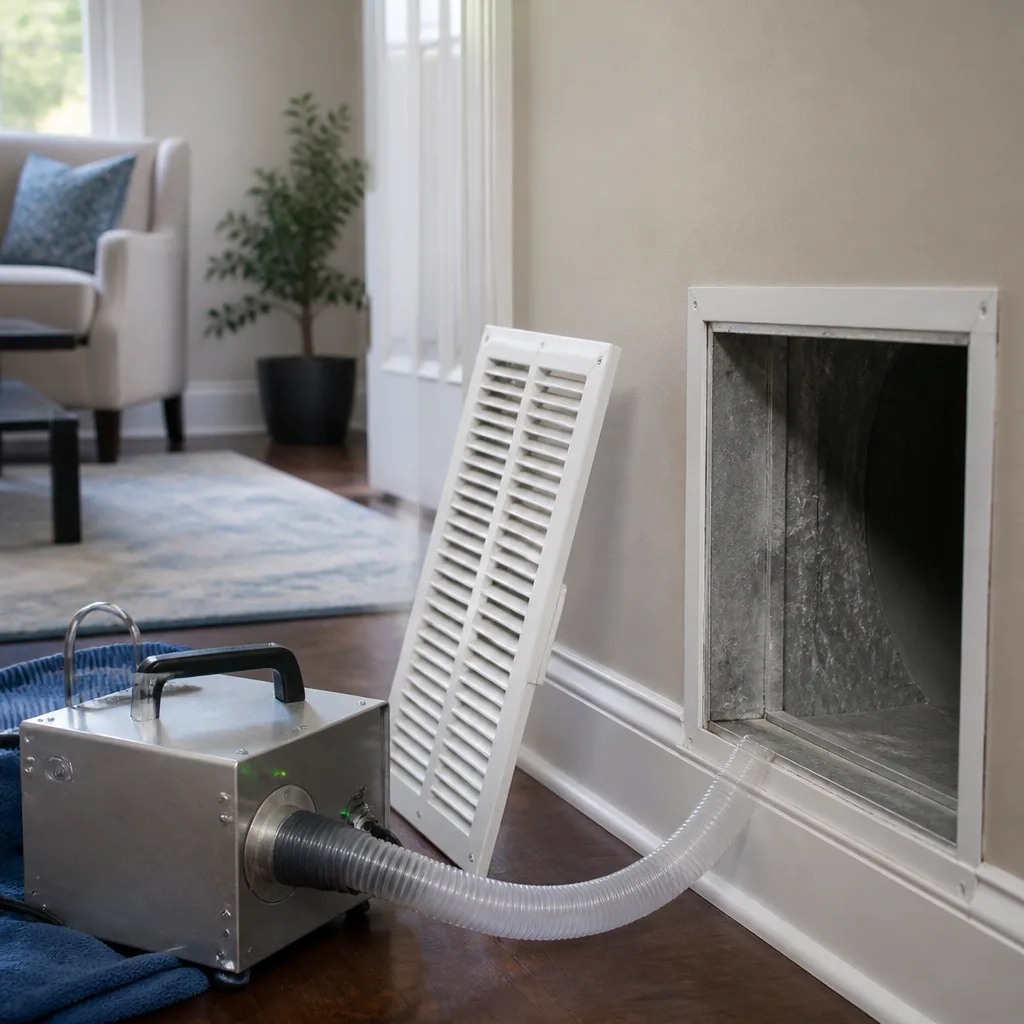 Sanitizing & deodorizing
Whole-system duct and dryer vent check with before-and-after photos - you see exactly what came out of your vents
That "$99 whole-house special" is a bait ad - the real number appears once they are in your hallway, or the "clean" is a shop-vac at the register. We photograph the inside of your ducts before and after instead.
Air Duct Cleaning Emergency Preparedness Guide for Dilworth Homes
After a kitchen fire, the smoke you can see is roughly 5% of the problem. The part that matters lives inside your return system: fine particulates that got pulled into the ductwork before anyone thought to shut the HVAC off, now coating every duct surface and coil fin in the house. The same principle applies after a flood or a roof breach, just with water vapor, mold spores and insulation fibers instead of smoke. What follows is the protocol we walk Dilworth homeowners through when the damage is already done: how to stop the spread, what a real emergency cleaning involves mechanically, and how to document the whole thing so your insurer sees a clear, defensible record.
Quick Answer
If your home has had a fire, flood, or storm breach, shut off the HVAC system at the thermostat and the breaker before anything else, then have the duct system inspected and cleaned before you restart heating or cooling. Emergency duct cleaning differs from routine cleaning in three ways: negative-pressure containment, sequencing of deodorization and antimicrobial treatment, and photo and air-quality documentation built for an insurance claim. Call (855) 337-2086 to schedule an assessment. We answer 24/7, with fast dispatch from 7am to 7pm, Sunday through Friday.
Styles & brands we work with
- Whole-home duct cleaning
- Dryer vent cleaning
- Camera inspection
- Sanitizing & deodorizing
Table of Contents
- Post-Fire Protocol: Stopping Smoke From Circulating
- Post-Flood Moisture and the Return System in Dilworth Homes
- Storm Debris and Attic Breach: What to Check
- What Emergency Duct Cleaning Involves Mechanically
- Documenting Duct Condition for Your Insurance Claim
- The First 72 Hours: A Step-by-Step Sequence
- Why Equipment Choice Changes the Outcome
- Preparing Your Ducts Before the Next Event
Post-Fire Protocol: Stopping Smoke From Circulating
Smoke residue behaves like a gas until it cools, then it settles as a sticky film on every cool surface it touches, including the inside of your return ducts and the evaporator coil. If the system ran during or right after the fire, that film is already distributed through the whole air pathway. The priority in the first hour is stopping any further distribution. Shut the system down at the thermostat, then trip the air handler breaker so it can’t cycle on its own. Close the dampers on any zone you can reach. Open windows on the opposite side of the house from the fire room to ventilate, but don’t run fans that pull air through return grilles.
What the cleaning contractor needs from you
Before a crew arrives, gather the documentation your insurer will ask for later. Have ready:
- The date and time the fire occurred, and whether the HVAC was running at that moment.
- Photos of the fire room, the nearest return grille, and the air handler if it’s accessible.
- Your policy number and the claim number if one has been opened.
- Any fire department report or incident number.
- The name of any restoration company already on site, so scope doesn’t overlap.
We sequence post-fire duct work to prevent cross-contamination between rooms: containment barriers go up first, then the return side is cleaned before the supply side, and deodorization follows mechanical cleaning rather than preceding it. If deodorization runs before the debris is removed, the smoke odor reasserts itself within days. After cleaning, an antimicrobial or protective treatment such as a Guardsman-grade product can be applied to help slow microbial growth on damp surfaces, though it’s not a substitute for removing the source. Routine air duct cleaning handles dust and normal buildup; fire residue needs the containment and sequencing described below.
Post-Flood Moisture and the Return System in Dilworth Homes
Water damage after a burst pipe, sump failure, or storm-driven infiltration is where duct problems quietly begin. Dilworth has a real mix of older slab-on-grade and crawl space homes, and both introduce moisture to the return system in ways that aren’t always obvious. In a slab home, water wicks under flooring and can reach a below-grade return chase without ever showing a stain inside. In a crawl space home, the return ductwork often runs through humid unconditioned space, and a slow leak or a disconnected joint draws damp crawl air directly into the living space.
How fast does microbial growth start?
In warm, humid conditions, visible mold can begin forming on porous duct lining and coil surfaces within roughly 24 to 72 hours of sustained moisture exposure. Air conditioning running during that window makes it worse: the coil stays wet, the ducts stay cold and condensation forms, and spores that were already present find ideal conditions. That timeline is why the first response after any flood is to stop the HVAC and start drying, not to run it in an attempt to “clear the air.”
- Flex duct that got wet: usually replaced, not cleaned. The inner liner traps moisture and is difficult to dry thoroughly.
- Sheet metal that got wet: cleanable and dryable, but every joint and seam needs inspection after drying.
- Duct board or fiberglass-lined interiors: replace any section that stayed wet beyond 48 hours.
- Crawl space return runs: inspect for disconnected joints, sagging runs holding water, and animal intrusion.
If you’ve had standing water in the home, get an inspection scheduled before your first heating cycle, since a warm furnace pushing damp air through the house makes an existing moisture problem worse. Our HVAC cleaning scope includes the coil and air handler, which is where flood-related contamination usually hides.
Storm Debris and Attic Breach: What to Check
When a storm opens a roof or pushes water into an attic, the duct system becomes the place where exterior contamination lands. Loose-fill insulation gets sucked into return chases, animal intrusion follows the opening, and wet sheathing feeds mold that spores into the air stream. Attic duct runs in Dilworth homes are especially likely to be flex duct, which sags and can trap debris at the low points. The check-list below is what we walk through after any roof damage, tree strike, or significant attic water intrusion.
Inspect these five things first
- Disconnected attic duct joints. A joint that came apart during the storm pulls attic air directly into the system. Look for visible separation at plenum connections and at every flex duct collar.
- Insulation present inside ducts. Fibers visible at a supply register mean some section has been breached. Insulation fibers in the air stream are a respiratory irritant and need to be removed.
- Animal intrusion evidence. Droppings, nesting material, or chewed flex duct near a roof opening means a partial or full duct replacement is on the table, not a cleaning.
- Wet insulation around ductwork. Compressed or discolored attic insulation around a duct run tells you the duct surface was wet and may have grown mold.
- Outdoor debris in the return. Leaves, roofing granules, or grit behind the return grille indicate a direct path from outside into the system.
If you find any of these, shut the system down and get an inspection before it runs again. Storm debris is one of the few situations where a cleaning alone may not be enough; duct repair and sealing become part of the scope. That’s why our work extends past the vents to dryer vent cleaning and duct repair as well, since a breached system has to be made tight before it can be made clean.
What Emergency Duct Cleaning Involves Mechanically
Routine cleaning removes dust buildup. Emergency cleaning removes a specific contaminant (smoke, water-borne microbes, storm debris) from a system, and the mechanical approach has to be different to actually solve the problem. The three things that separate an emergency job from a routine one are containment, deodorization, and antimicrobial sequencing.
1. Containment comes first
Before any agitation happens, the crew sets up negative pressure in the system using HEPA-rated vacuum equipment so that dislodged contaminants go into a filter rather than into the room. Rotobrush rotary brush systems are one part of the process, but on an emergency job the containment is what makes the brush work safe to run at all. Without negative pressure, cleaning a smoke-damaged duct just redistributes the residue. This is also why we use Abatement Technologies HEPA filtration on remediation-level jobs: the airflow and filtration capture matter more than the roar of the machine.
2. Mechanical cleaning removes the source
Rotary brushes and specialized agitation tools loosen debris and residue from the duct walls, then the airstream pulls it into the HEPA vacuum. Supply and return sides are handled separately with the correct negative-pressure configuration for each. Registers and grilles are removed and cleaned outside the duct, not just wiped in place. The air handler and evaporator coil get cleaned as part of the scope, because smoke and microbial residue settle on the coil fins just as readily as on the ducts.
3. Deodorization and antimicrobial treatment go in a specific order
Deodorization only works after the physical residue is gone. Skip that step and the odor returns within a few days because the source is still there. The correct sequence is:
- Contain and dry.
- Mechanically clean every accessible surface.
- Verify by photo that the surfaces are actually clean.
- Apply deodorizer to neutralize residual odor compounds.
- Apply antimicrobial or protective treatment if the inspection showed microbial growth or persistent damp.
- Replace filters and re-run the system to confirm airflow and odor are acceptable.
Between steps we walk the homeowner through what came out of the system and what the surfaces look like before and after. That transparency matters, because the whole point of an emergency cleaning is being able to verify that what was in there is actually gone.
Documenting Duct Condition for Your Insurance Claim
The documentation you or the contractor builds during the cleaning is what determines whether your claim covers duct work at all. Insurers want to see condition-before, condition-after, and a clear causal link between the event and the contamination. The best record includes four things: photos, moisture readings, airflow measurements, and a written narrative tying them together.
What to photograph (and when)
- Before cleaning: the fire or water source, the nearest return grille interior, the air handler, and every duct surface showing visible residue.
- During cleaning: the filtration equipment in place, the extraction container showing captured debris, and any section of the system that revealed damage (a disconnected joint, chewed flex, wet insulation).
- After cleaning: the same duct surfaces shown in the “before” shots, taken at the same angle for easy comparison.
- Readings: moisture readings from duct surfaces and coil, and pre/post airflow measurements. Include the meter used and the date.
What the written narrative should include
A photo alone rarely convinces an adjuster that duct cleaning was necessary. A short written report tying the visible evidence to the event, describing the equipment and sequencing used, and stating the scope actually performed is what supports the claim. Ask the contractor for this in writing before work starts so the documentation is built during the job rather than reconstructed afterward. If an emergency cleaning was already performed under a restoration company’s direction, the duct cleaning report should also state what work remains, so the two scopes don’t double up.
One detail worth knowing: air quality readings taken with a particle counter before and after cleaning are useful supporting evidence, but they’re not the deciding factor. Insurers weigh the duct condition photos, moisture readings, and the causal narrative far more heavily. Get those first. If the documentation request comes from your adjuster, send it to us directly and we’ll provide the report and photos as a package.
The First 72 Hours: A Step-by-Step Sequence
What you do in the first three days determines how much of the duct system survives and how large the claim becomes. This sequence is what we walk Dilworth homeowners through after a fire, flood, or storm breach.
Hours 0-2
- Shut the HVAC system off at the thermostat.
- Trip the air handler breaker so it doesn’t cycle automatically.
- Open windows on the opposite side of the fire or water source to ventilate without pulling air through returns.
- Take wide-angle photos of the affected rooms before moving anything, if it’s safe to do so.
Hours 2-24
- Begin drying any standing water or wet surfaces in the home, in the fire case ventilate and begin removing loose charred material.
- Document each return and supply register with a photo.
- Contact your insurer and open the claim.
- Schedule a duct inspection.
Days 2-7
- Full inspection of the air pathway, including the air handler and coil.
- Containment and mechanical cleaning.
- Deodorization or antimicrobial treatment, in that order.
- Post-cleaning photos and airflow verification.
- Restart the system and confirm performance before closing the claim.
The governing principle: don’t run the HVAC during or immediately after any event that produces airborne contamination, and don’t restart it until the system has been inspected and cleaned. Restarting a smoke- or moisture-contaminated system doesn’t just recirculate the problem, it distributes it into every room the ducts reach.
Why Equipment Choice Changes the Outcome
The single biggest variable in an emergency duct cleaning is how much of the dislodged material ends up in a filter versus in the air you’re standing in. Consumer-grade vacuums and generic shop tools move air but don’t contain it. Remediation-grade equipment captures it. That difference is what separates a cleaning that actually removes the contaminant from one that just stirs it up.
What we run and why
Our technicians have up to 9 years of experience working with equipment rated for the environment. On emergency jobs we use:
- Rotobrush rotary brush systems for mechanical agitation of duct walls, since the benchmark in duct cleaning is whether the brush can reach the full surface rather than just the easy runs.
- Nikro HEPA-rated vacuums for collection, because the filter is what actually keeps debris out of the room.
- Abatement Technologies HEPA filtration for containment on remediation-level jobs, bringing commercial remediation techniques into residential scope.
- Aprilaire and Honeywell air quality systems as an add-on for homeowners who want to maintain post-cleaning air quality rather than relying on cleaning alone.
Equipment alone isn’t a promise. The crew needs to know the sequence and the containment setup, and the whole system has to be in scope. Cleaning vents without cleaning the air handler and coil leaves the largest source of contamination untouched, which is why our work covers the whole path: cleaning, dryer vent cleaning, HVAC cleaning, sanitizing, and duct repair and sealing under one scope. You can see that full-service scope on our Air Duct Cleaning Dilworth page.
Preparing Your Ducts Before the Next Event
You can’t prevent a fire or a storm, but you can make the next event cheaper to fix and easier to document. The preparation is mostly inspection, sealing, and knowing what’s actually in your duct system before anything happens.
Do these now, while the ducts are dry and clean
- Get a baseline inspection. A written report on your duct condition before any event gives your insurer a clean starting point.
- Seal accessible joints. Loose attic duct joints are the most common path for storm debris and animal intrusion. Sealing them before a storm keeps that path closed.
- Confirm your return configuration. Knowing which registers pull air from which rooms shortens the shutdown decision in an emergency.
- Photograph the current condition of the air handler and ducts. Store the photos with your insurance documents so a future claim has a clean “before” reference.
- Confirm your HVAC shutoff location. Both the thermostat and the air handler breaker. In a fire, seconds matter.
Dilworth’s older housing stock and mix of slab-on-grade and crawl space construction means moisture is more likely to reach a return than in newer construction, so crawl space duct runs deserve the most inspection attention. A dry, sealed duct system is the single best defense against a small event becoming a large claim.
Common Mistakes to Avoid
- Running the HVAC “to clear the air” after a fire. That’s exactly what distributes smoke residue through every room. Shut it down first, ventilate the room separately, and don’t restart until inspected.
- Deodorizing before cleaning. Deodorizer sprayed on uncleaned residue only masks the surface. The odor returns within days, and the source is still there.
- Replacing wet flex duct without inspecting the return chase. New duct installed into a damp chase develops the same problem. Drying the space comes before replacing the duct.
- Assuming a standard cleaning covers post-flood contamination. Emergency work requires contained, remediation-level filtration and appropriate treatment. Ask what negative pressure is being used and where the exhaust goes.
- Skipping documentation because “the adjuster will figure it out.” Photos, moisture readings and a written narrative built during the job are what get duct work covered. Reconstructed after the fact, they’re much weaker.
- Leaving a breached attic duct connected after a storm. A displaced flex duct collar pulls attic air, insulation fibers, and any animal intrusion straight into the living space.
- Not knowing the air handler breaker location. Every emergency response begins with turning the system off, and that requires access to the breaker.
See the difference
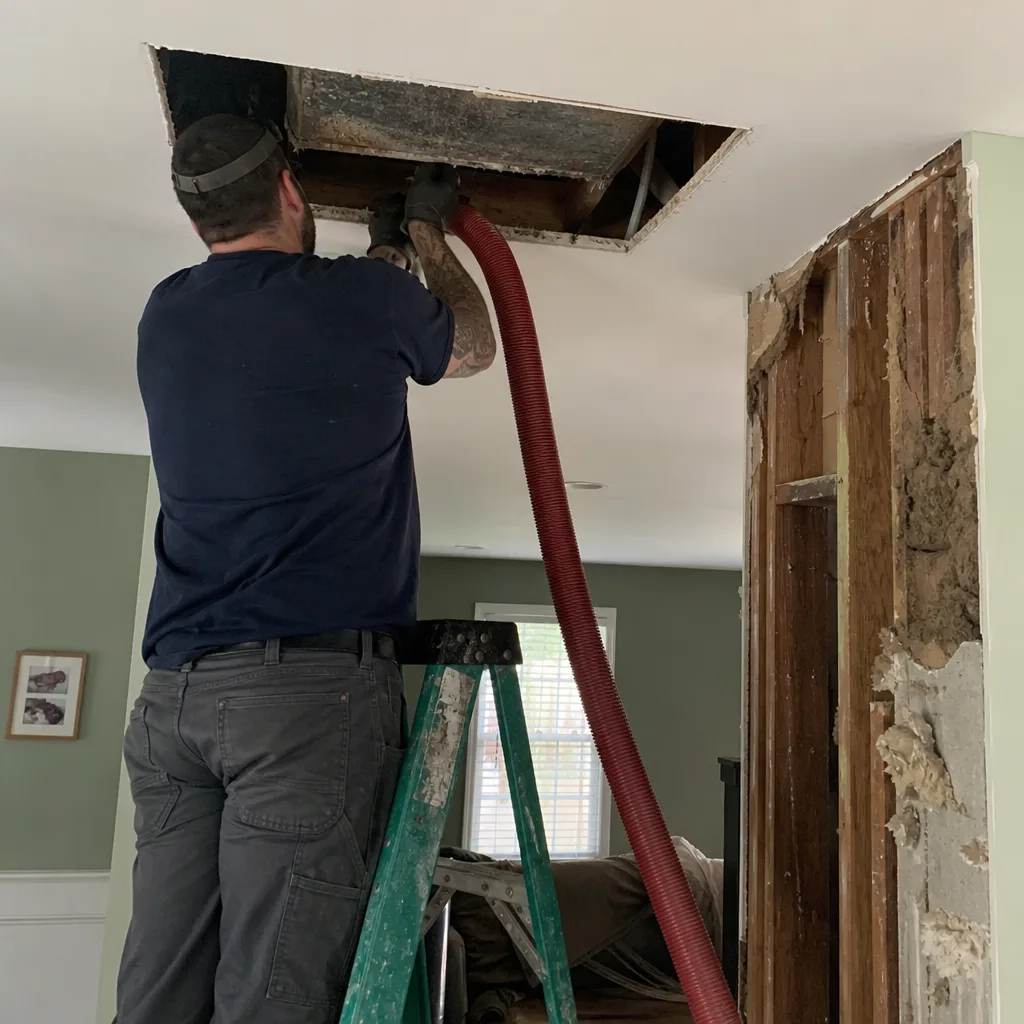 Before
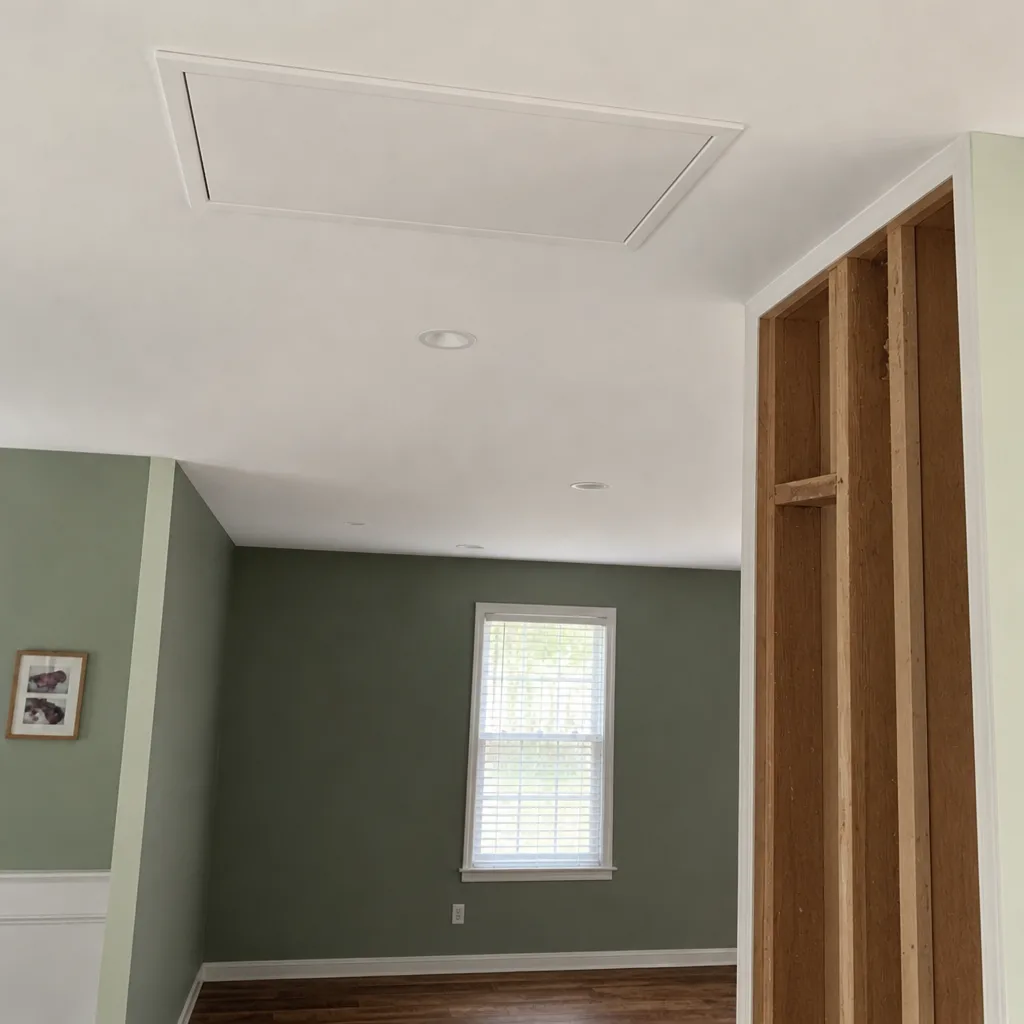 After
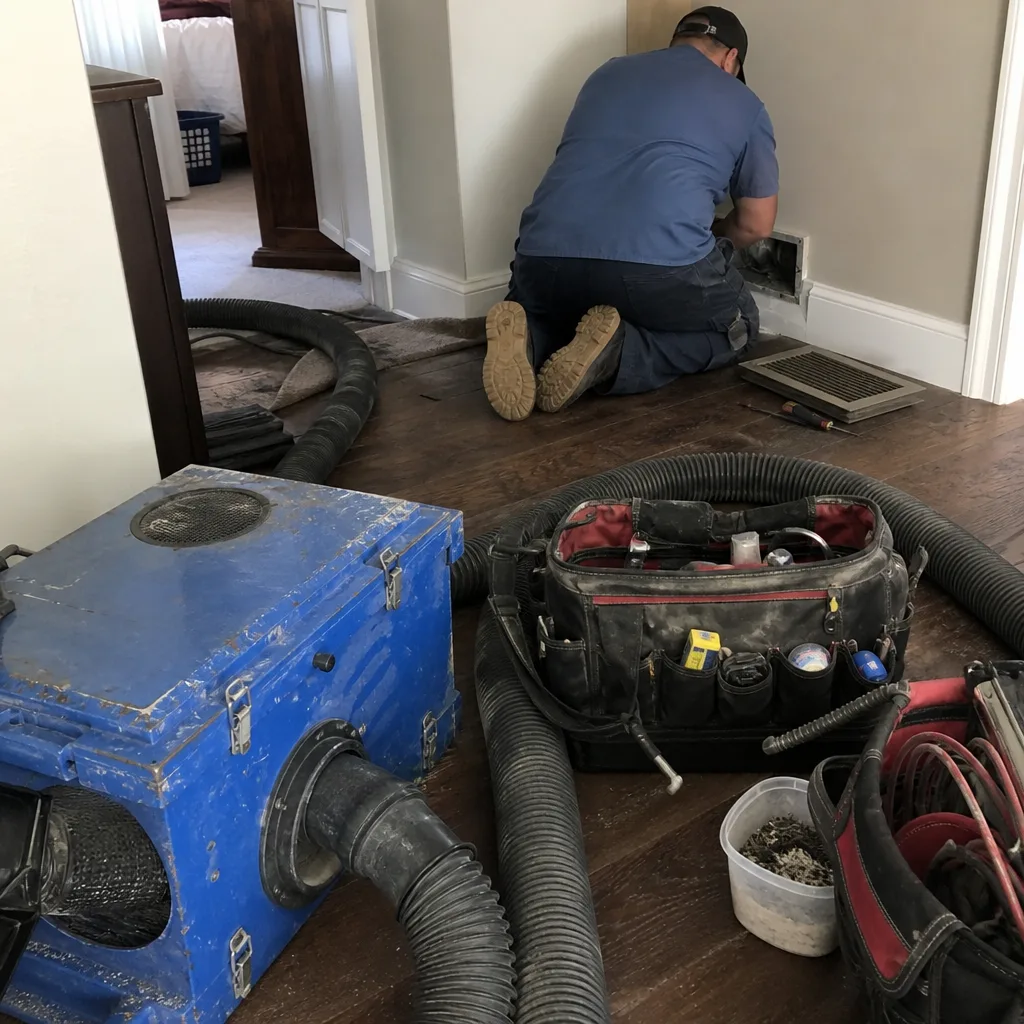 Before
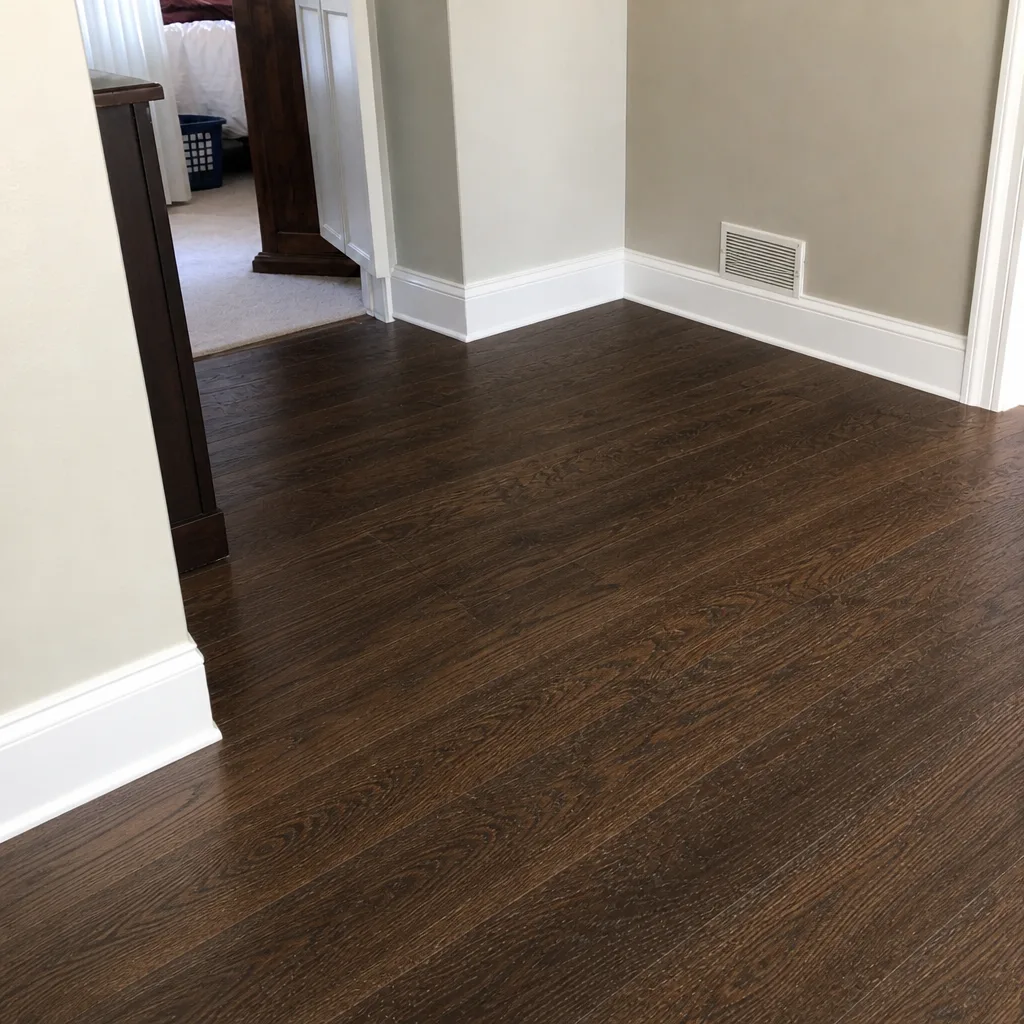 After
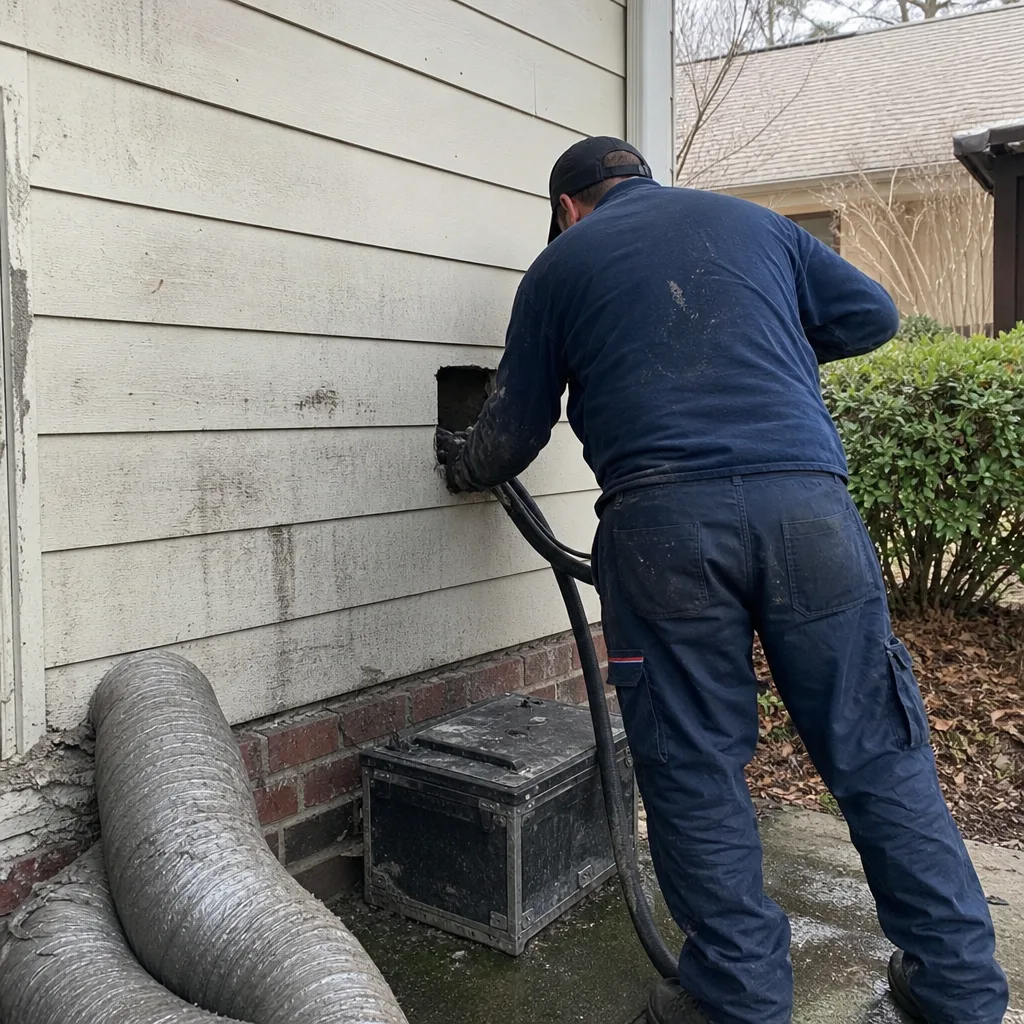 Before
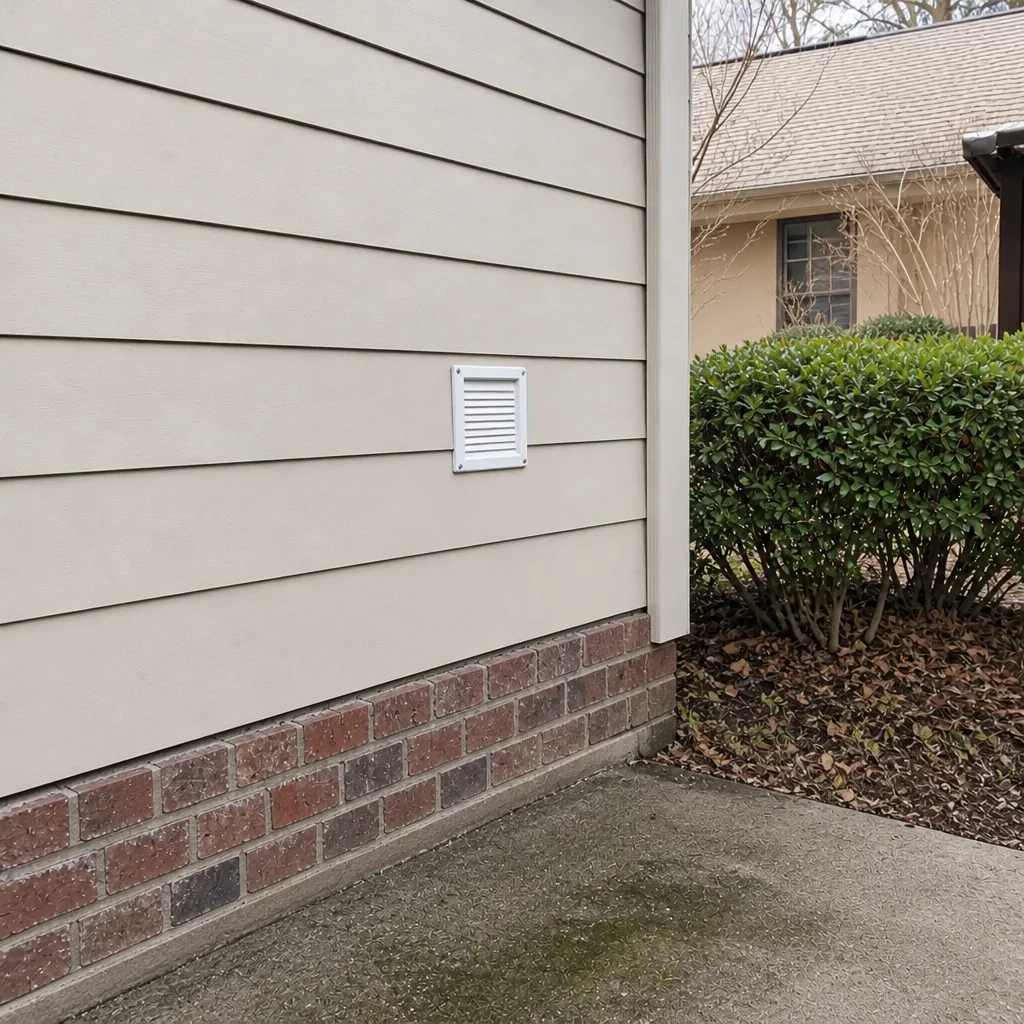 After
When to Call a Professional
Call a professional after any fire, flood, or roof breach that could have introduced contaminants into the air pathway. That includes visible smoke residue at the registers, standing water that reached the air handler or return chase, attic intrusion, animal entry through roof damage, or a musty smell that got worse after a storm. Call us also if your insurer has asked for documentation and you don’t yet have a written duct condition report, or if you’ve had work done by another provider and the smell or symptom hasn’t resolved. Air Duct Cleaning Dilworth offers free estimates in Dilworth: call (855) 337-2086. We answer 24/7. Fast dispatch from 7am to 7pm, Sunday through Friday. A call outside dispatch hours is booked into the next opening, Sunday through Friday, 7am to 7pm. Estimates are free and the price is set per job by the written estimate before any work starts.
Frequently Asked Questions
Within the first few days, once the structure is secure and drying or ventilation has begun. Smoke residue bonds more tightly to duct surfaces the longer it sits, and moisture from firefighting can start microbial growth within 24 to 72 hours. Scheduling the inspection first and the cleaning second keeps the sequence straight. Call (855) 337-2086 for an exact quote, since pricing depends on system size and scope.
Yes, if humidity in the home stayed high for more than a day or two. Flooded homes hold moisture in wall cavities, subfloor, and insulation for weeks, and the HVAC system circulates that moisture through every return cycle. The ducts themselves may look fine while the air handler coil grows mold. Get an inspection before your first heating or cooling cycle of the season.
Often, yes, when the coverage is triggered by a covered event (fire, burst pipe, wind damage) and documentation ties the duct contamination to that event. Coverage depends on your policy and adjuster, and we don’t make coverage decisions. What we can do is provide the photos, readings and written report your adjuster needs to evaluate the claim. Call us and we’ll walk you through what the report includes.
Cheaper quotes usually drop the parts of the job that actually contain the contaminant: no negative pressure, no HEPA filtration, no air-handler or coil cleaning, and no documented before-and-after. On an emergency job, cutting those steps means the contaminant isn’t removed, it’s recirculated. Ask every contractor three things: what negative pressure equipment are you using, is the air handler in your scope, and will your report include readings and photos. If any answer is vague, that’s your answer.
Ask for photos of the interior of the ducts before and after, and a walk-through while the equipment is still on site. The captured debris container should be visible to you. Readings (moisture at the coil, airflow at the registers) should be in the written report. Transparency is what makes a cleaning verifiable rather than a promise. Call (855) 337-2086 to schedule and we’ll walk you through the process before any work begins.
Typically once per event, with a routine cleaning on a regular schedule afterward to maintain the system. If the odor or symptom returns within a few weeks, the likely causes are an overlooked source (a disconnected joint, damp lining, damaged flex) or a deodorization step that ran before full mechanical cleaning. A follow-up inspection will find which.
The Bottom Line
After a fire, flood, or storm breach, the duct system becomes the distribution path for whatever entered the home, and the response has to be mechanically different from routine cleaning. Shut the HVAC off first. Contain before you agitate. Mechanical cleaning before deodorization and treatment. Photos, readings and a written narrative built during the job, not after. Choose a contractor whose equipment actually captures contaminants, whose scope includes the coil and air handler, and who gives you before-and-after evidence to hold alongside your insurance record. That’s the protocol that keeps a small event from becoming a large claim, and it’s the protocol we follow on every emergency job in Dilworth.
Call (855) 337-2086 for a free estimate. We answer 24/7. Fast dispatch from 7am to 7pm, Sunday through Friday.
Written by the team at Air Duct Cleaning Dilworth.